

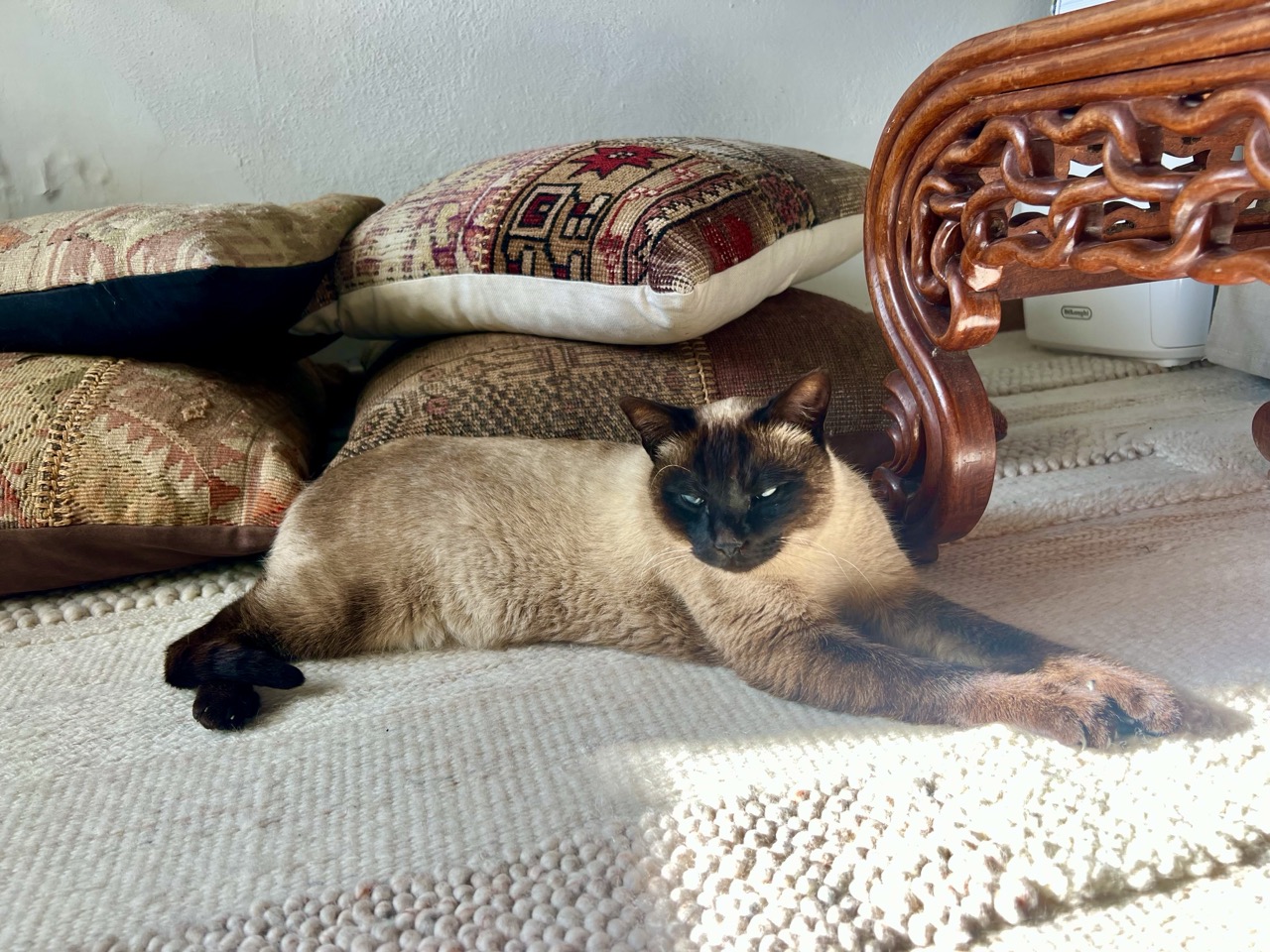
Last year, I adopted a very cute and rather cross-eyed six-year-old Burmese called Merlin.
Like many cat owners (especially those of us immersed in the world of wellness and healthy living), I assumed I was naturally making “good” choices for him.
Quality food? ✓
A calm, clean home environment? ✓
Love, safety and affection? Absolutely ✓
What I hadn’t realised was how many well-intentioned, everyday habits can quietly undermine an indoor cat’s physical and psychological wellbeing - even when they appear perfectly “fine.”
After listening to a veterinary behavioural deep-dive that genuinely stopped me in my tracks, I began researching feline health more seriously. What I discovered was confronting: many indoor cats aren’t thriving - they’re 4r5. Particularly apartment cats. And as masters of disguise, cats suffer silently.
This isn’t about guilt. It’s about awareness.
Below are some of the most common - and surprisingly harmful - wellness blind spots in modern homes, along with simple preventative changes that can dramatically improve your cat’s quality of life.
The Litter Box Stress We Don’t See
Cats are instinctively clean animals. In the wild, they would never urinate and defecate in the same location.
A single scented litter tray - especially one not cleaned daily - can create significant stress. Some cats will even hold their urine, increasing the risk of urinary tract infections and kidney strain.
Wellness essentials:
- One litter tray per cat, plus one extra
- Unscented litter only
- Quiet placement, away from food and water
- Daily cleaning
Hydration & Kidney Health: A Silent Risk for Indoor Cats
In nature, water near food signals contamination. This is why many cats avoid bowls beside their meals and prefer taps or glasses.
Chronic dehydration is one of the leading contributors to kidney disease - a major cause of premature death in indoor cats.
Simple fixes:
- Separate food and water stations
- Use a flowing water fountain
- Offer multiple water sources throughout the home
Boredom Isn’t Relaxation - It’s Depression
A cat sleeping 16 - 20 hours a day may isn’t relaxed - they are instead under-stimulated.
In the wild, cats spend hours hunting, climbing and surveying territory. Without enrichment, indoor cats can develop anxiety behaviours, over-grooming, OCD patterns or aggression.
Preventative enrichment:
- Puzzle feeders
- Rotating toys weekly
- Window perches
- 15 minutes of interactive play twice daily (avoid laser pointers)
The Toxic Home: When “Clean” Isn’t Healthy
This was my biggest wake-up call. Many essential oils, diffusers, incense and plug-in air fresheners - even natural ones - are toxic to cats. Their livers cannot metabolise these compounds. Oils settle on fur and are ingested during grooming, causing cumulative damage.
High-risk products include:
- Essential oil diffusers
- Plug-in air fresheners
- Scented candles
- Incense
- Conventional cleaning products
Safer alternatives:
- Eliminate diffusers and fragranced sprays
- Use pet-safe cleaners - enzyme-based or simple vinegar/bicarbonate cleaning solutions
- Ventilate well
- Keep fragrance minimal and away from pets
- Incense - use natural cat safe versions - Sandalwood, Frankincense, Cedar, Chamomile, Lavender, Catnip, Valerian.
A healthy home environment should be safe for every member of the household - including the four-legged ones.
Feeding, Weight & The Quiet Metabolic Crisis
Deep bowls can cause whisker fatigue - a painful sensory overload that discourages eating.
Free-feeding, meanwhile, is strongly linked to feline obesity, diabetes and arthritis. Just 900 grams overweight on a cat is the equivalent of over 13kg on a human.
Feeding guidelines:
- Use flat plates or wide, shallow bowls
- Feed 2 - 3 structured meals daily (dawn and dusk rhythm)
- Treats ≤10% of calories (4 - 5 small treats daily)
- Prioritise high-protein, grain-free, low-additive food
Preventative pet health often comes down to routine and portion awareness.
Vertical Space & Emotional Security
Cats are climbers. Up to 50% of their time in nature is spent elevated. Without vertical territory and safe hiding spaces, indoor cats can experience chronic stress, which inevitably leads to depression.
Support their instincts:
- Cat trees at least 1.5x their height
- Wall shelves or cleared bookcases
- Cat caves, boxes and quiet dark sleeping spaces
Night-time should be dark - cats rely heavily on circadian rhythm and routine for nervous system regulation.
The Myth of the “Independent” Cat
Cats form attachment bonds similar to young children. Long hours alone without engagement can lead to separation anxiety and behavioural decline.
Connection matters:
- 15 minutes of engaged interaction, three times daily
- Respond to attention-seeking behaviour
- Consider enrichment tools or a sitter if frequently away
Wellness is relational - for humans and animals alike.
Dental Health, Warmth & Routine
By age three, over 70% of cats show signs of periodontal disease.
Cats also prefer warmer environments (26 - 30°C) and rely heavily on predictable routine.
Foundational care:
- Annual vet checks and early tooth brushing
- Warm bedding or heated pads
- Consistent feeding and play times
Vitamin D, Cat Grass & Collar Stress
Window sunbathing alone does not provide adequate Vitamin D. Deficiency impacts immune health, bones and kidneys.
Indoor cats also require cat grass for fibre and hairball elimination - otherwise they may chew toxic houseplants.
And collars? Imagine a bell ringing in your ear constantly. Not to mention safety risks.
Wellness adjustments:
- Supervised outdoor access or appropriate UV pet lighting
- Provide fresh cat grass weekly
- Indoor cats do not require collars
- Outdoor cats should use breakaway collars - without bells
A Gentle Reality Check
If you recognise more than half of these habits - your cat isn’t failing. Our education is.
Not everything is practical at once. Start with the five most impactful changes and work from there. Many cat parents notice improvements in mood, appetite and behaviour within days.
Merlin certainly did.
Wellness isn’t about perfection. It’s about noticing what our loved ones cannot articulate - and choosing to do better, one small shift at a time.
Link to Mallorca Bulletin: https://www.majorcadailybulletin.com/holiday/life-style/2026/02/09/140113/loving-them-death-the-hidden-wellness-traps-for-cats-home.html
Disclaimer
I am not a veterinarian or medical professional. I share insights gathered from research, expert sources and lived experience, with the intention of encouraging more informed and compassionate wellness choices.
Have you ever realised a kind habit was quietly working against your pet, or against you? Tell me below, these always surprise me.
Further Inspiration:


0 Comments