

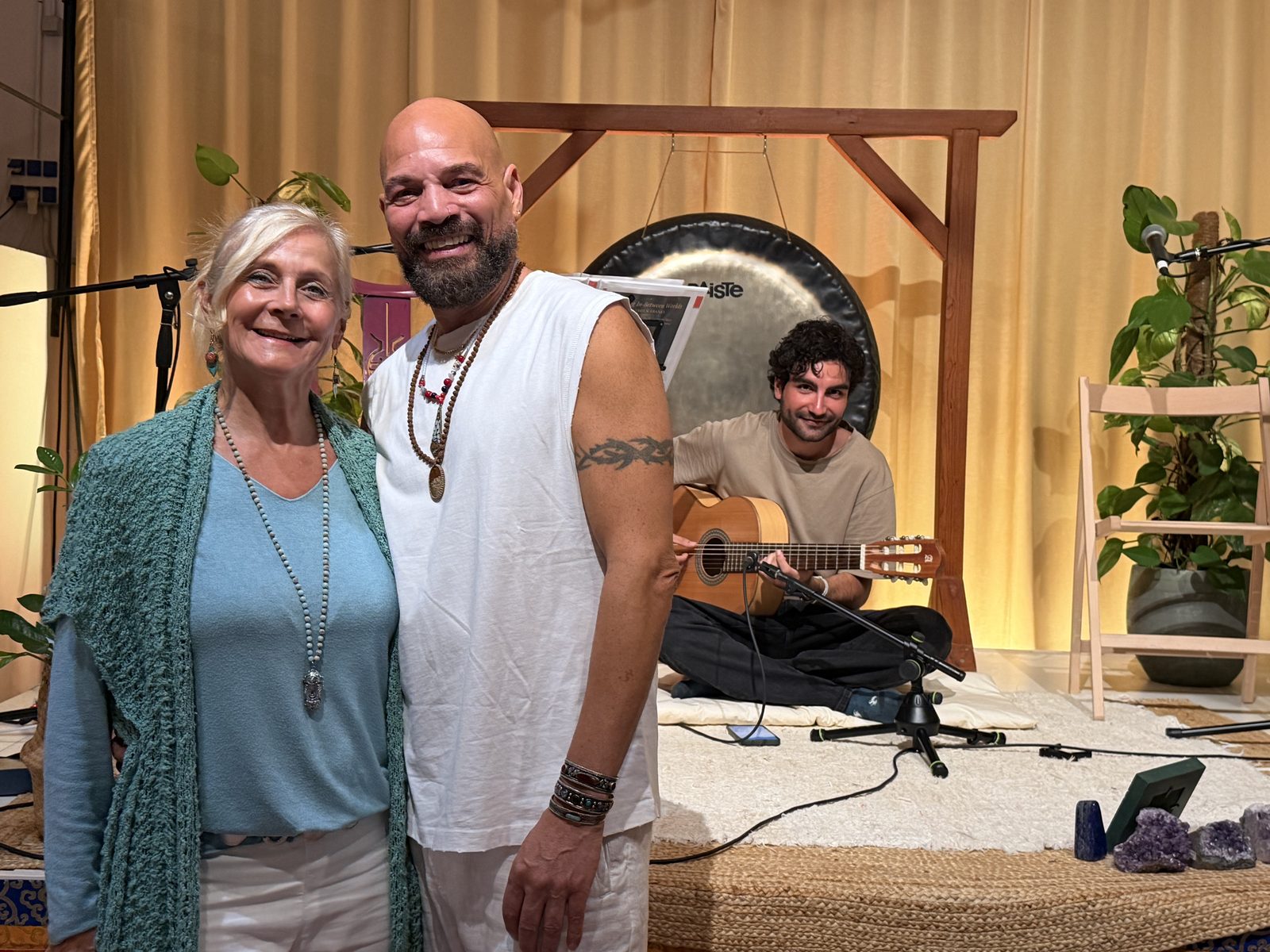
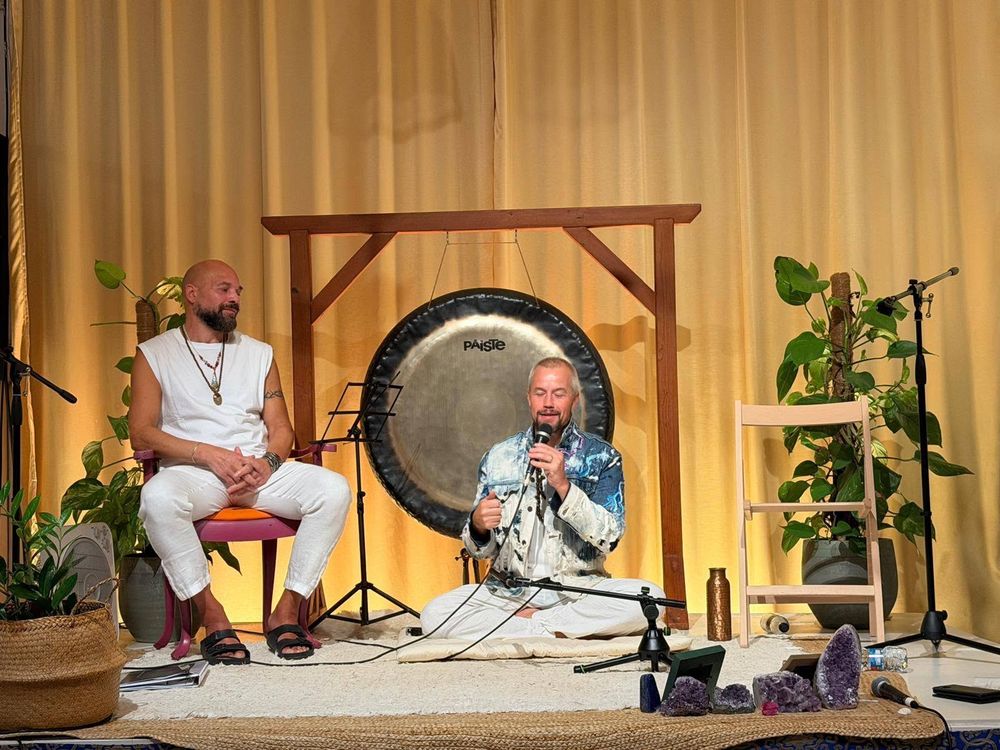
Hearing Larrick Ebanks sing at the recent Beyond the Veil book launch in Mallorca carried a particular poignancy for me. I know Larrick, and remember the concern surrounding his long stay in hospital during the pandemic, when Covid restrictions made an already frightening situation harder. At one stage, there were serious concerns about his vocal cords. For a singer-songwriter, the uncertainty reached into the heart of his own identity.
Now he has a book to share, Dancing In-Between Worlds, an account of the near-death experience he describes during his time in a coma, and a story that reaches from the intensive care unit at Son Espases to experiences he describes as encounters beyond the physical world. But alongside the extraordinary is something deeply relatable: the difficult work of recovering, accepting help and learning how to live again.
From music and magazine deadlines to Son Espases
In the winter of 2021, Larrick was busy working in the Celebrity Magazine office, enjoying island life and preparing for a New Year’s Eve performance. A regular gym-goer and cyclist, he was accustomed to being active. Then suddenly his energy started depleting and singing left him breathless. Cycling became difficult. Night sweats, chills and exhaustion followed.
Still, he kept working. There were deadlines and people he did not want to disappoint. Eventually, his close friend Donna (whom he refers to as his sister) insisted he needed to go to the hospital and called an ambulance. He arrived with his laptop, imagining a short stay.
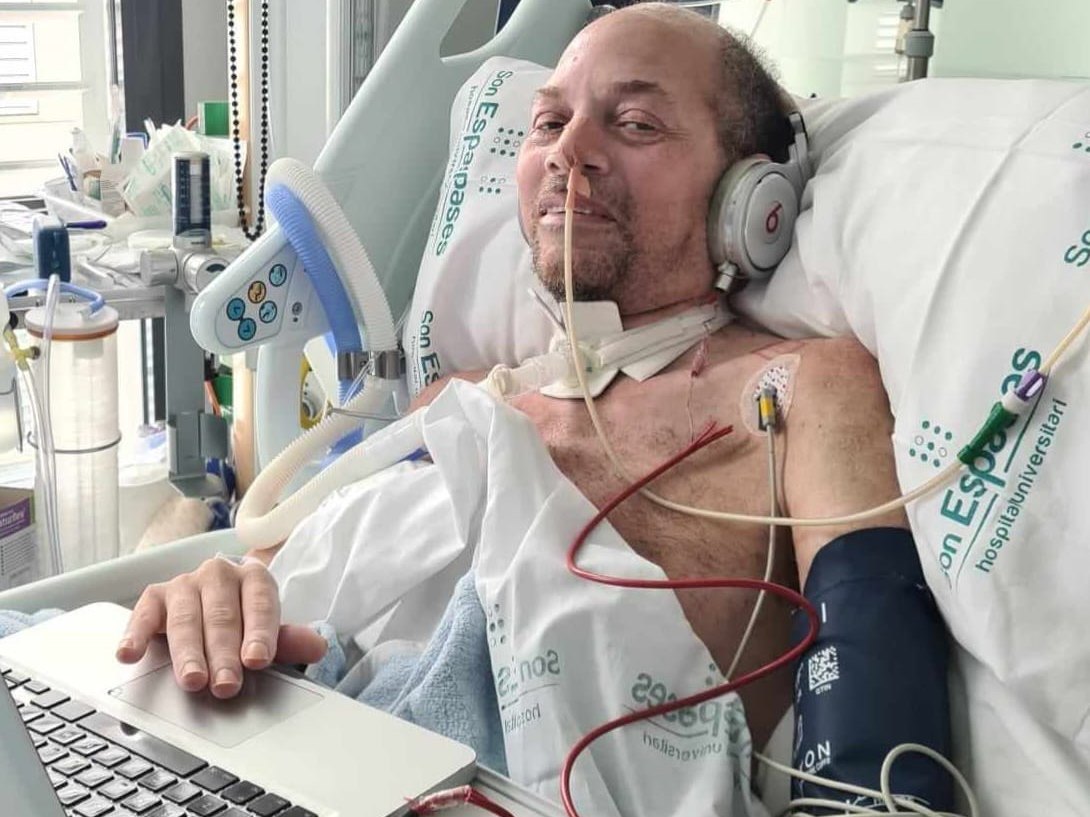
Instead, his condition rapidly deteriorated. In his account, his lungs collapsed and he required intensive care, where he was placed in an induced coma and on ECMO life support. What followed was three months in a coma, five months in ICU and eleven months in hospital overall.
A near-death experience beyond the hospital bed
While doctors worked to keep him alive, Larrick recalls experiencing a reality far removed from his hospital bed. He describes travelling through different realms, some frightening, others filled with an overwhelming sense of love. One message, he says, arrived telepathically: “This is an endurance test.”
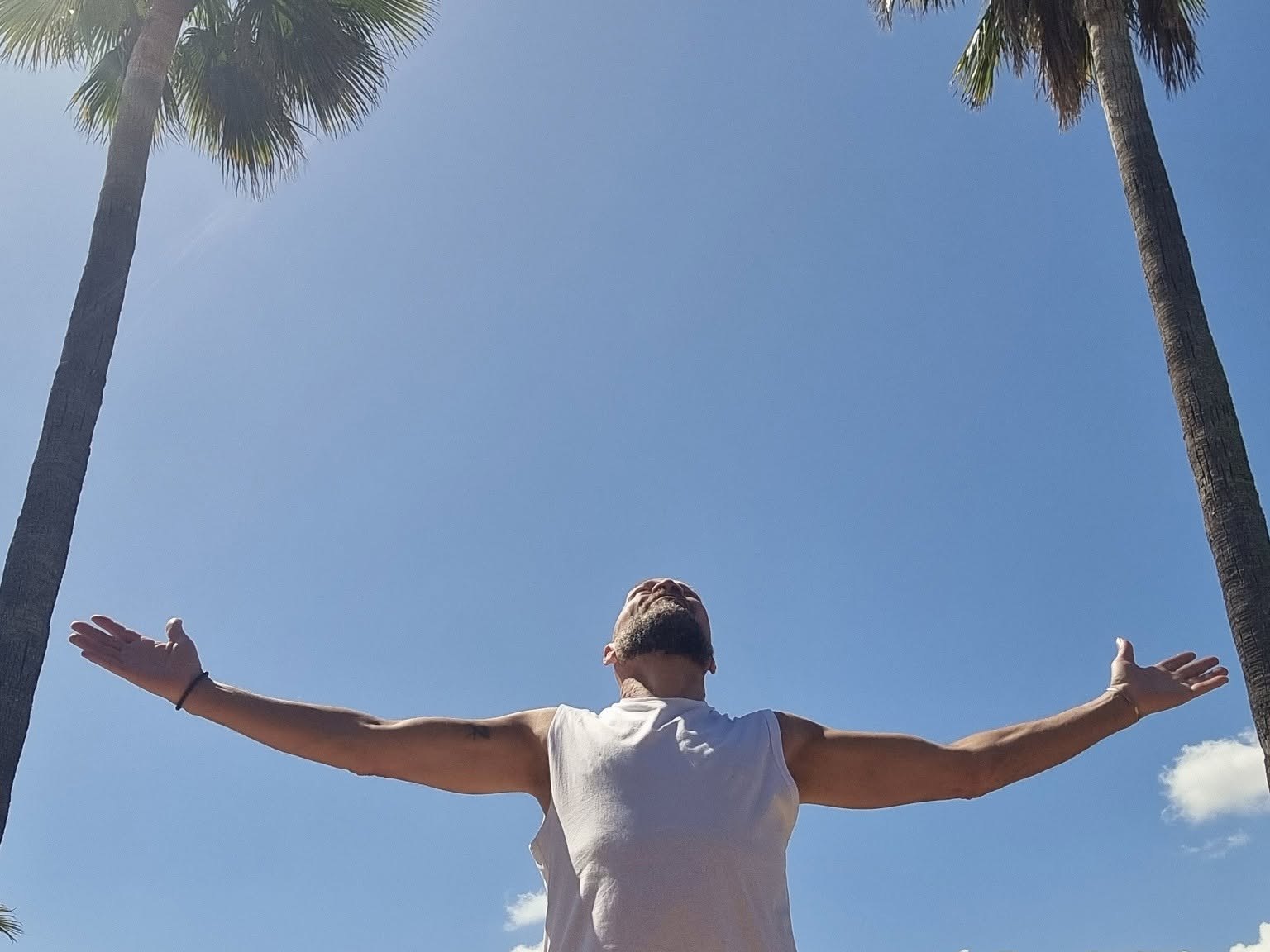
Spirituality was already part of his life, but he describes these experiences as different from meditation or dreams.
“I experienced a level of clarity unlike anything I had known before. I was seeing myself and my experiences in high definition, with a much clearer sense of who I am and a deeper understanding of purpose.”Larrick Ebanks
These are his recollections and the spiritual meaning he draws from them. Readers will bring their own beliefs and questions to his account. What emerges particularly strongly, however, is how it changed his understanding of his relationships.
During what he calls a “life review”, he remembers encountering the consequences of his behaviour from other people’s perspectives.
“I saw the life I had just lived, the people I had met, those I had hurt and those I had shown kindness to. I felt what they felt,” he explains.
It left him with a deeper appreciation of how words, actions and even intentions can affect others in ways we never fully realise. For him, connection and kindness became central to the life he wanted to return to.
Dancing In-Between Worlds and the meaning of return
In the book’s description, Larrick writes of dark and challenging experiences alongside moments of profound love. He recalls symbols, teachings and a return to childhood memories, including a purple wizard hat. These details give his account an intensely personal language: a way of expressing experiences that he feels ordinary descriptions cannot quite contain.
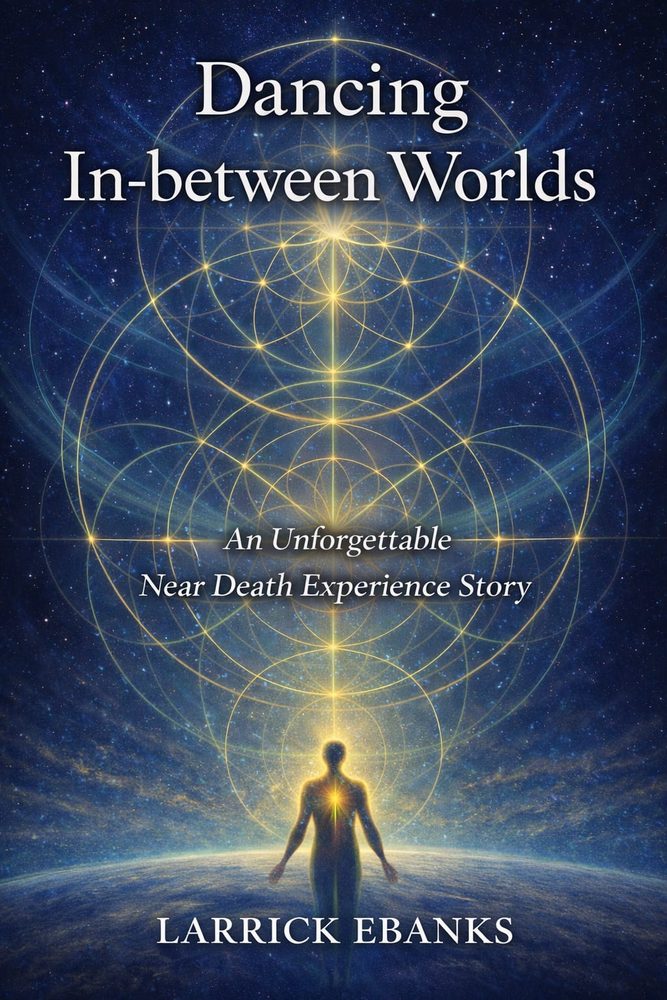
He describes learning to navigate these encounters through what he calls “frequency”. In his telling, fear made the experiences feel more constricted, while compassion opened a different way forward. He remembers feeling guided towards a return to Earth, although he did not initially know what that return would involve.
At the book launch, he spoke about surrender and a message he remembers receiving as he came back: “This is a rebirth.” For him, that idea helped frame the bewildering experience of returning to a weakened body with a changed understanding of his life.
The title Dancing In-Between Worlds reflects that sense of moving between his awareness of the hospital and the other realities he remembers. The book offers his interpretation of those experiences, rather than a clinical explanation of what happens during a coma.
Recovery after a coma and the comfort of community
Waking from the coma marked the beginning of another demanding journey. His body was profoundly weakened, and I know something of the determination and sustained effort behind his return to singing and sharing his story. Throughout his recovery, he had the comfort of knowing that a whole community of friends and family was cheering him on. Donna kept everyone connected through a group chat, sharing updates on his progress and keeping that circle of support close, even when we could not be there in person.
Leaving hospital brought challenges he had not fully anticipated. “Trying to fit back into a fast-moving world was very challenging,” he says. Among other patients, progress had been measured against people facing similar difficulties. Outside, the contrast was stark. “It was only after leaving hospital that I truly realised how ill I had been and how challenged I still was.”
His first significant milestone was moving from a walking frame to two walking sticks. “It’s interesting how having something taken away from you that we take for granted, like mobility, can change perspective. And then slowly regaining what I’d lost, how much more we appreciate things. Even a new walking stick gave me a wonderful new sense of freedom.”
That detail stayed with me. After everything he describes experiencing, freedom could also mean being able to move through an ordinary day with a little less support.
Accepting care was another lesson. Larrick acknowledges that he has sometimes failed to reach out when he needed help, something he feels many men will recognise.
“It taught me self-worth and the importance of accepting help,” he says. The kindness of those around him, including Donna and the hospital team, remains a profound part of his story. At the launch, he spoke warmly of the medical staff whose care he still appreciates.
Today, looking after himself includes keeping every check-up, resting when necessary and paying closer attention to his body. He also speaks to it with loving affirmations. His spiritual outlook sits alongside gratitude for the treatment that helped him survive.
Larrick and the ECMO fundraising project
As Larrick recovered, he became increasingly aware of how fortunate he had been to have access to an ECMO machine, the life-support system that had sustained him during his coma. With so few machines available at the time, he understood that his age and physical fitness had helped inform the decision to offer him this treatment.
Gratitude soon became a determination to give something back. After leaving hospital, he set himself the challenge of raising funds for another ECMO machine for Son Espases. Together with the Fundación JoyRon, which supports paediatric patients, he led a fundraising campaign for a Cardiohelp-i ECMO unit valued at nearly €79,000.
In November 2025, the new machine was presented at Son Espases, where it now carries a plaque bearing the name The Larrick ECMO. It strengthens the hospital’s intensive care capacity for adults and children alike. Alongside the demanding work of rebuilding his own health, helping others access the care that had supported his survival became an achievement of which he is deeply proud.
Finding his voice again through music and writing
Music had been woven through Larrick’s life long before his illness. His debut single, What You Give Me, was released in 1997, and his album Larrick Through The Looking Glass 1986-2016 brought together three decades of songwriting. Alongside performing, he has worked in journalism and run live music and DJ venues. Creating spaces where people come together has been a recurring part of his work.
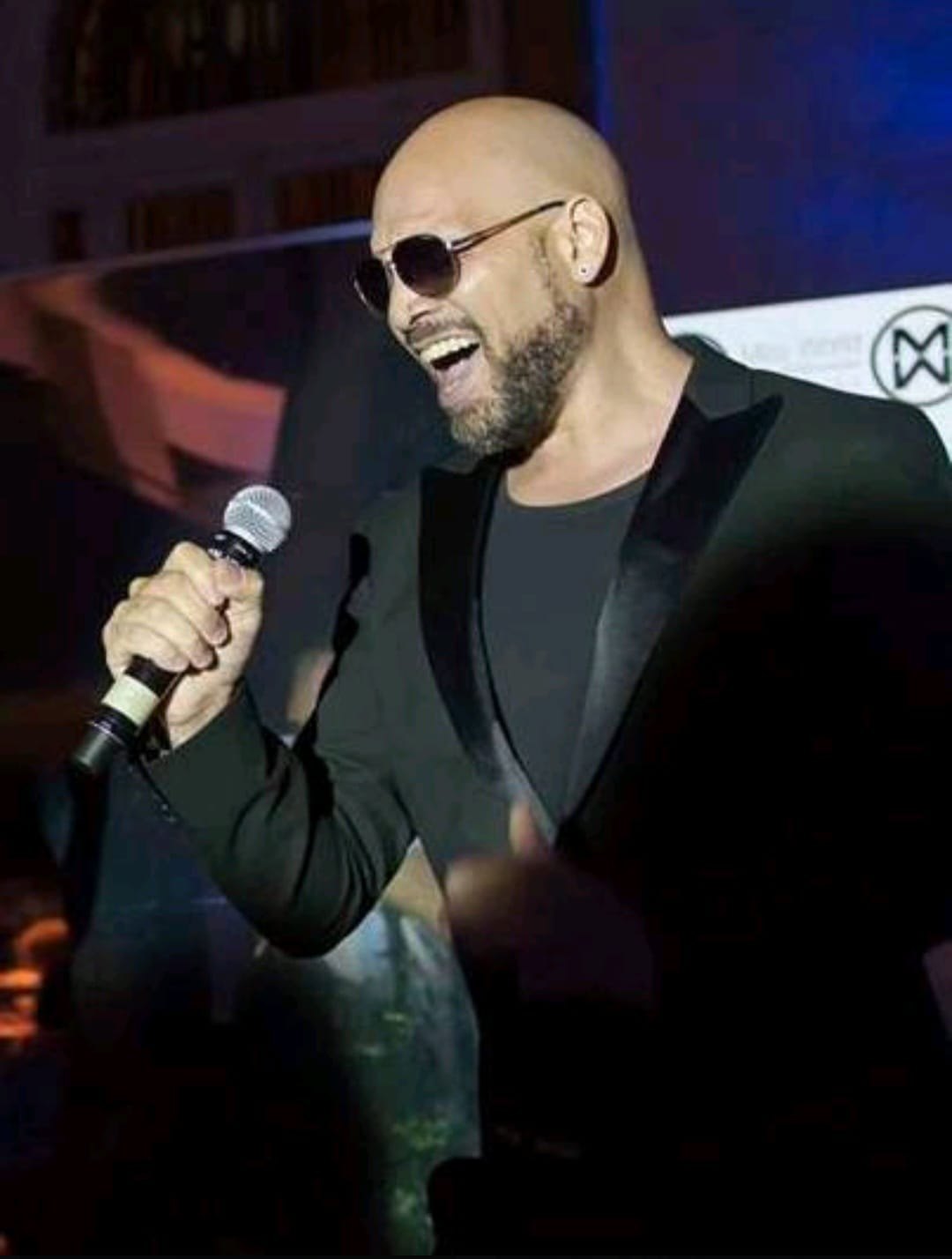
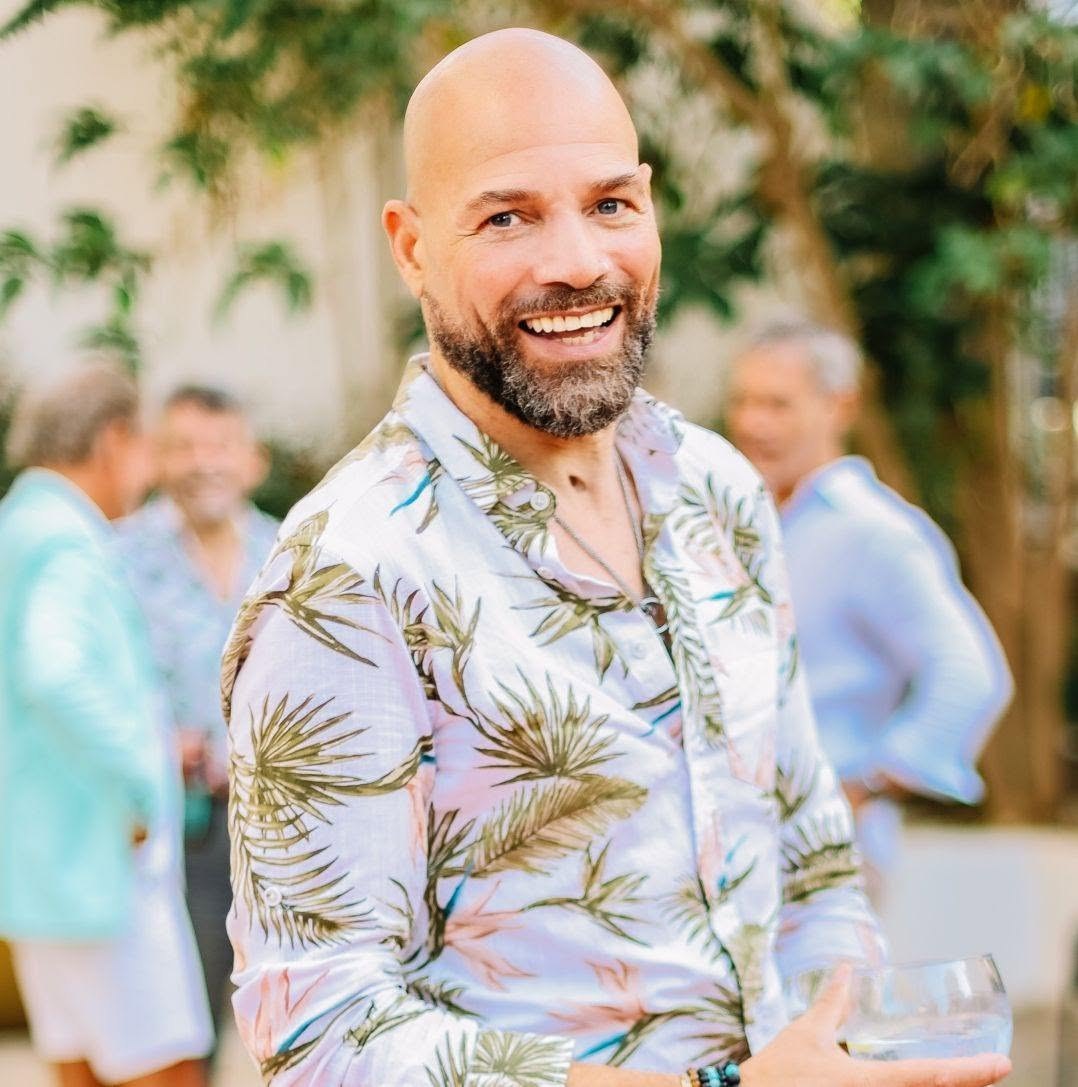
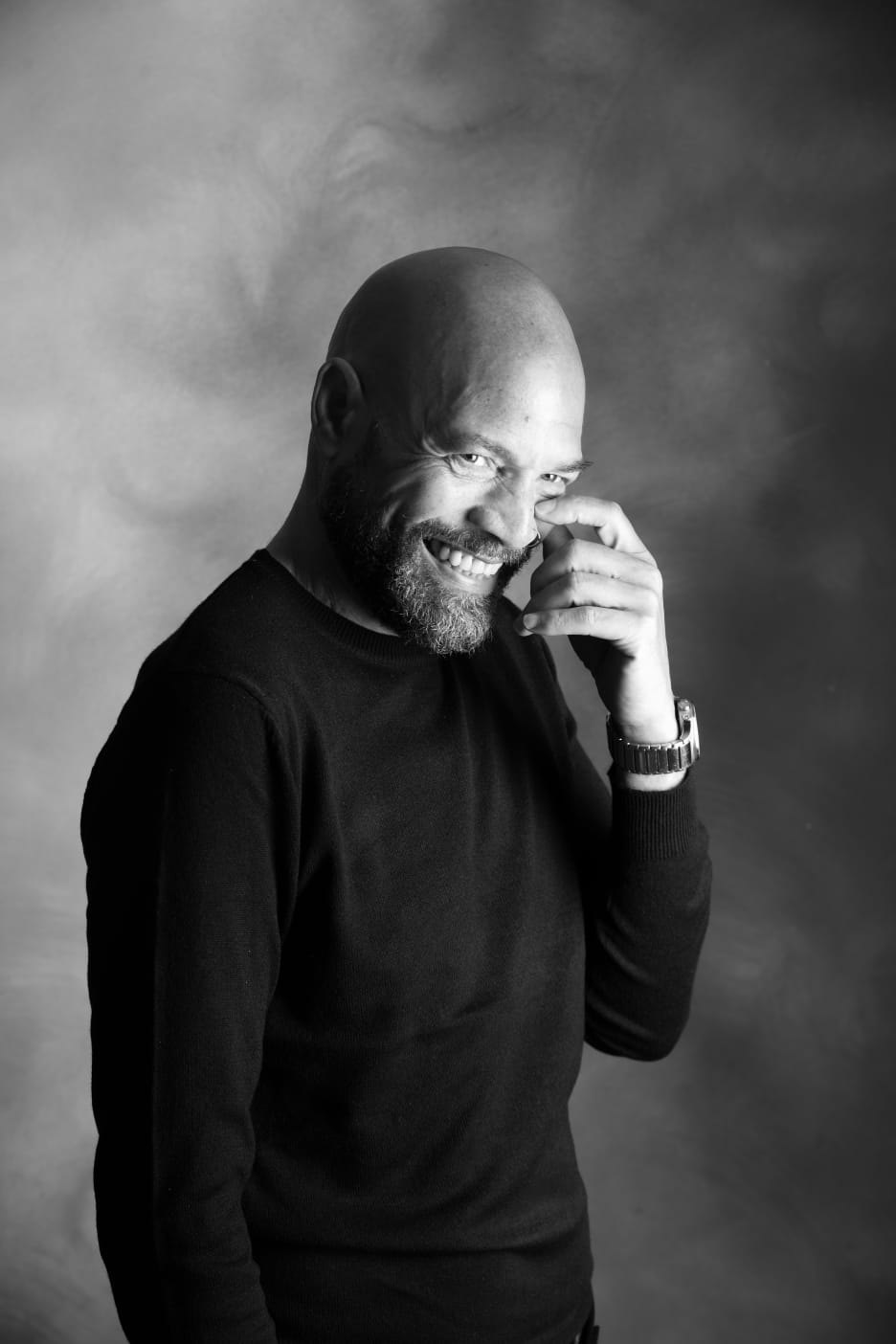
That background gives his return to singing a particular significance. When there had been serious concerns about his vocal cords, the possibility of losing that form of expression was deeply unsettling. Hearing him perform at Beyond the Veil brought the long journey between those moments into focus.
Larrick’s creativity has taken on what he calls “a new tone of expression”. Writing became a way to share experiences he believes carried a purpose. In one moment of synchronicity he particularly treasures, Donna arrived at hospital with a writing pad and pen, without having been asked.
“I like to think the angels had a hand in that!” he says. “Donna is my Earth Angel, and I’m deeply grateful for her unwavering support, love and dedication, and for insisting that I go to hospital. Her actions helped change the course of my life.”
His hope is that the book reaches curious readers asking deeper questions about life and who they are. Whether someone shares his spiritual interpretation or simply connects with the experience of rebuilding after illness, there is much to reflect on here.
What his story offers readers
There is room to approach this book with spiritual curiosity, with uncertainty, or simply with an interest in the human experience of surviving serious illness. Larrick’s account invites questions about consciousness and purpose, but the changes he describes also belong to everyday life: being more willing to ask for help, appreciating movement and making time to rest.
For readers supporting someone through a difficult recovery, Donna’s role may resonate particularly strongly. Her insistence on getting him to hospital, her practical support and the connection she maintained between friends and family are an essential part of this story. So, too, is Larrick’s gratitude to the people who cared for him at Son Espases.
For me, the most compelling part is seeing someone I know find his voice again, and hearing what he now chooses to do with it. One question he offered at the launch has stayed with me:
“How do we find the ability to disagree with someone, without withdrawing love?”Larrick Ebanks, Beyond the Veil book launch
It is a question that reaches far beyond a hospital bed, or the pages of a book. It asks something of all of us in the lives we live, in every day and every moment.
Where to find Dancing In-Between Worlds
Dancing In-Between Worlds: An Unforgettable Near Death Experience Story of Survival, Synchronicity and the Great Return is published by Balboa Press and is available in paperback and ebook editions. You can explore the book through the publisher and listen to Larrick’s music on Bandcamp.
- Explore Dancing In-Between Worlds at Balboa Press
- Find the book on Amazon
- Listen to Larrick Ebanks on Bandcamp
- Watch Larrick on YouTube
Follow @larrickebanksofficial on Instagram and Facebook for updates.
Key Takeaways
- Accepting help is a strength: Larrick’s recovery was shaped by learning to receive care.
- Small freedoms matter: moving from a walking frame to walking sticks changed his whole perspective.
- Rest, regular check-ups and listening to the body are part of looking after yourself.
- Kindness travels further than we realise, the lesson he took from his “life review”.
- Gratitude can become action: his recovery led to a new ECMO machine, worth nearly €79,000, for Son Espases.
Has a time of illness or recovery, yours or someone close to you, changed what matters most to you? I’d love to hear what helped along the way, so do share it in the comments below.
Read & add your comment ↓Further Inspiration:
Compassionate care at Sacred Space · Growing through grief · Breathing through grief · Energetic healing in Mallorca

As featured in the Mallorca Bulletin
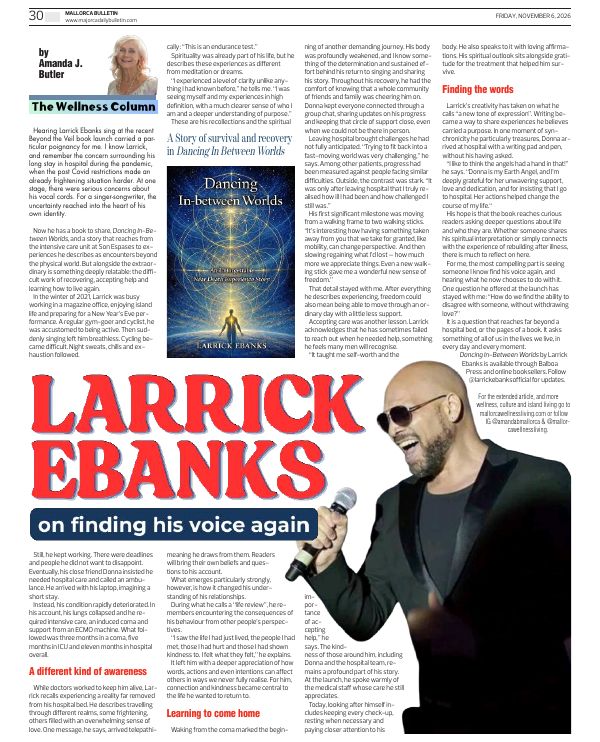
This article first appeared in Amanda’s Wellness Column in the Mallorca Bulletin. Read the original as a PDF →
Sources and Further Reading
- Dancing In-Between Worlds by Larrick Ebanks. Balboa Press.
- Dancing In-Between Worlds by Larrick Ebanks. Amazon.
- Larrick Ebanks music. Bandcamp.
- Larrick Ebanks official channel. YouTube.
- Ex-Covid-19 patient donates ECMO machine to Son Espases Hospital. Majorca Daily Bulletin, 2025.
- Dona un equipo ECMO a Son Espases tras permanecer 82 días en su UCI con covid-19. Mallorca Diario, 2025.
Frequently Asked Questions
Who is Larrick Ebanks?
Larrick Ebanks is a UK singer-songwriter, journalist and inspirational speaker with strong connections to Mallorca. He is the author of Dancing In-Between Worlds, which recounts his serious illness, experiences during an induced coma and recovery.
What is Dancing In-Between Worlds about?
The book recounts Larrick’s survival and recovery following a critical illness in Mallorca, alongside the experiences he remembers during his coma. It explores his spiritual understanding of love, kindness, synchronicity and purpose.
How long was Larrick Ebanks in hospital?
Larrick spent eleven months in hospital at Son Espases in Mallorca, including five months in intensive care and three months in an induced coma.
What is an ECMO machine?
ECMO (extracorporeal membrane oxygenation) is a life-support system that oxygenates the blood outside the body, giving the heart and lungs time to recover. Larrick was supported by ECMO during his induced coma at Son Espases.
How did Larrick give back to Son Espases?
After leaving hospital, Larrick set out to raise funds for another ECMO machine for Son Espases. Together with the Fundación JoyRon, he led a campaign that funded a Cardiohelp-i ECMO unit worth nearly €79,000, presented to the hospital in November 2025 as The Larrick ECMO.
Do readers need to share his spiritual beliefs?
Readers can approach his story from their own perspective. Alongside his spiritual account, the article explores rehabilitation, friendship, accepting help and returning to creative expression.
How can we support a friend through a long recovery?
Small, consistent gestures matter: keep in touch, share updates so the wider circle stays connected, offer practical help and gently encourage the person to accept support. In Larrick’s story, his friend Donna’s group chat kept friends and family close even when they could not visit.
0 Comments