

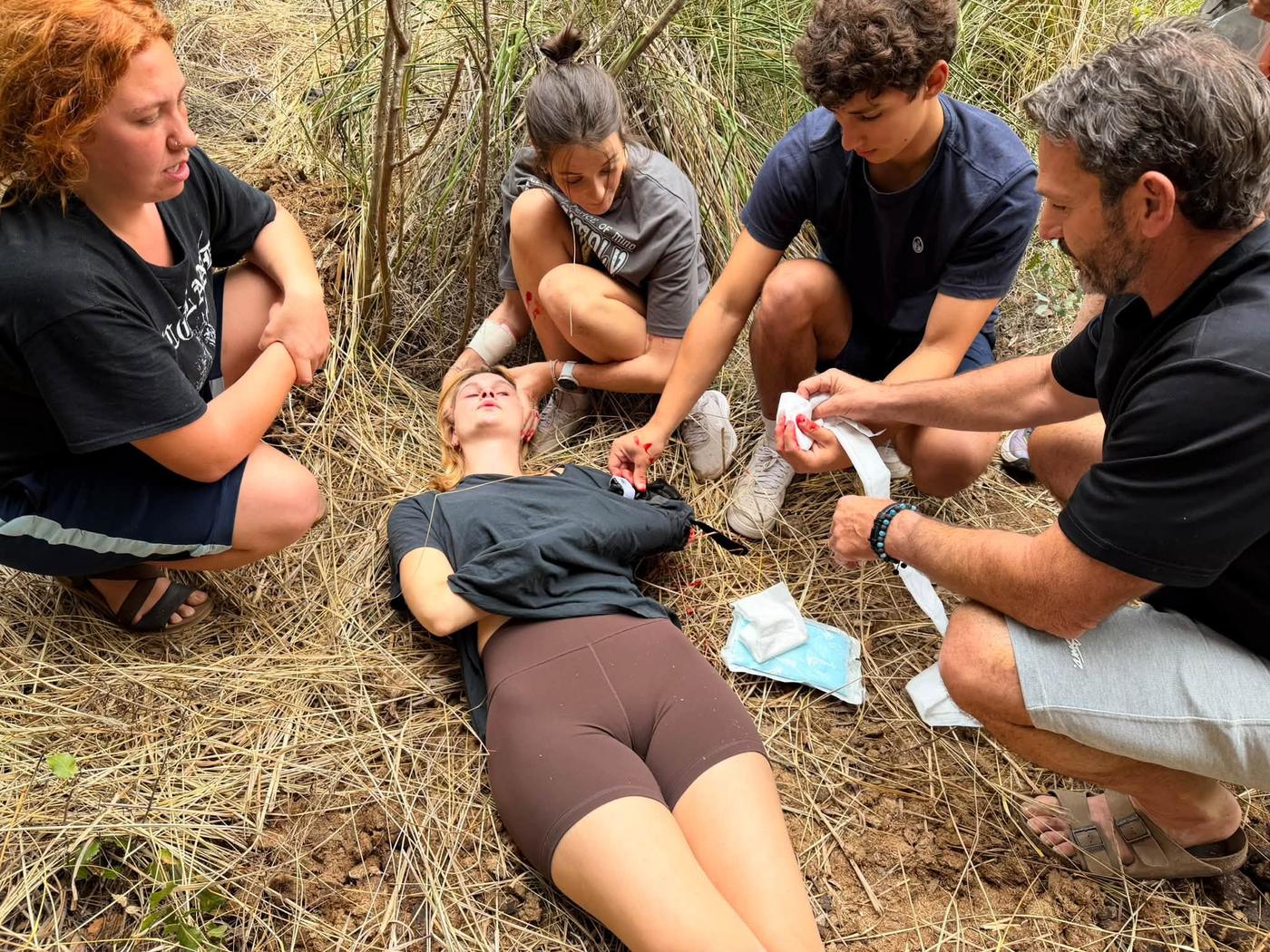
A day on Amanda Hewson Beaver’s Wilderness First Aid Essentials course near Artà in Mallorca reminded me how much there is to learn before an emergency happens, whether we are cycling, hiking or spending time on the water.
The last time I did any first aid training, I was in the fourth form at boarding school, learning CPR, mouth-to-mouth and how to stay afloat using my pyjamas in the local pool. I’m still waiting for the occasion when that last skill might come in handy - I certainly don’t think you can inflate a bikini.
So when I saw Amanda Hewson Beaver’s Wilderness First Aid Essentials course advertised, I signed up straight away. I spend a fair bit of time on a bike, or hiking out in the mountains in Mallorca. If someone I was riding with came off on a quiet road, or there was an incident on a trail, would I know what to do in those first few minutes? Once I got past ‘call for help’, my answer was a little hazy.
Why wilderness first aid matters when exploring Mallorca
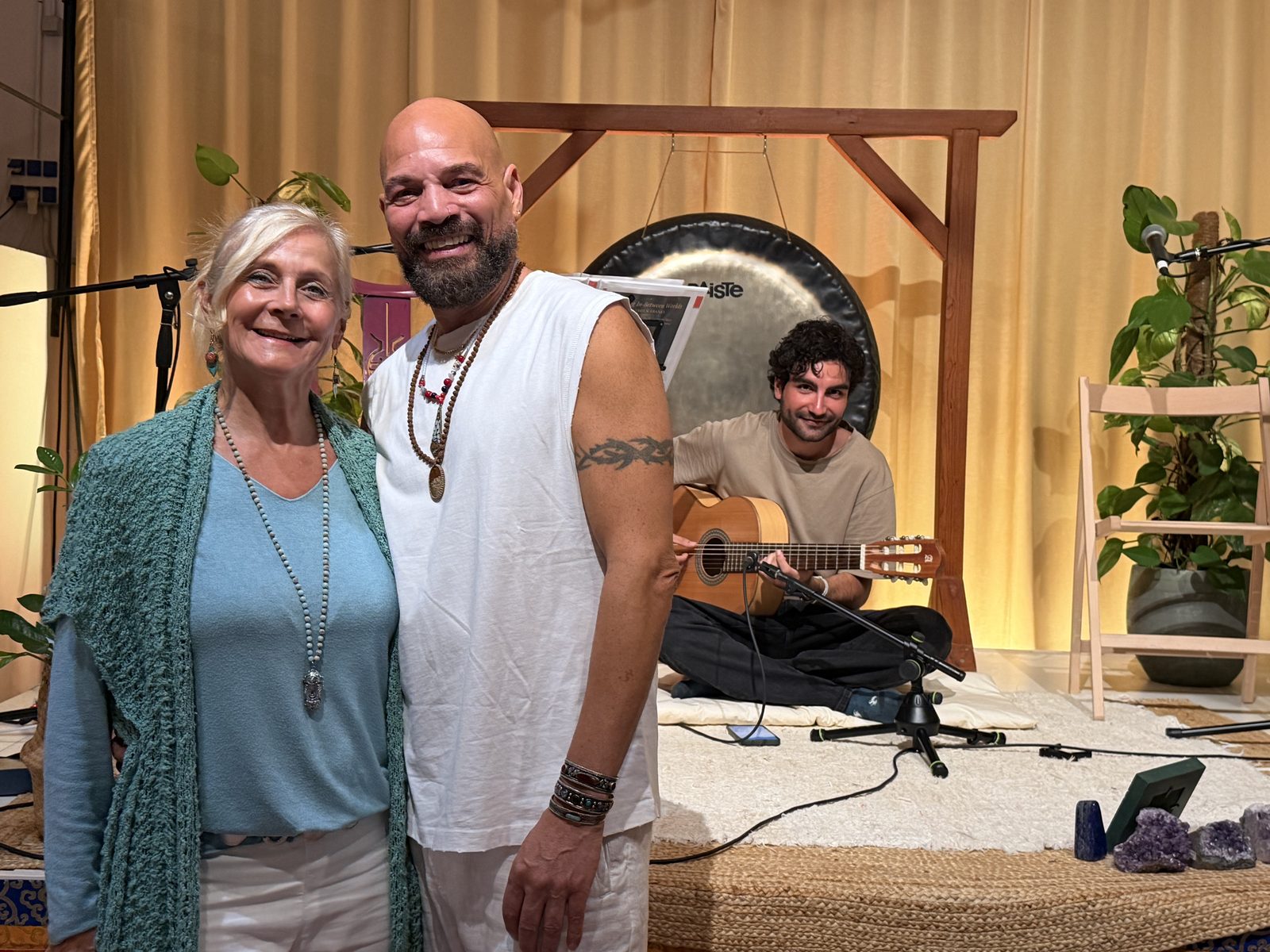
The training took place at Lizzie Graham’s retreat near Artà, just a few kilometres outside the town. My phone had already lost signal. It felt a little like the outback, although the welcome from Lizzie and her team, complete with a lovely cup of tea before we gathered in the yoga shala, was rather more civilised.
Amanda Hewson Beaver is a registered nurse, maritime medical educator and professional sailor. Her work has taken her from emergency departments and intensive care to remote-area nursing and medical retrieval, as well as offshore racing and expeditions. She teaches Wilderness First Aid Essentials with a question in mind that applies just as readily to a walk in the Tramuntana as it does offshore. What can you do for someone in the time it takes for help to reach you?
“What can you do for someone in the time it takes for help to reach you?”
Here in Mallorca, we are fortunate to have so many ways to spend time outdoors. A familiar route can take us along quiet lanes, into rocky woodland paths or down towards a secluded cove. That freedom also makes it worth thinking about how someone would reach us if we needed help. Distance on a map is only part of the question when access is difficult.
The course handout describes wilderness first aid as caring for injury or illness when professional help may be hours away. It brings together immediate priorities and the practical work of looking after someone while an evacuation is arranged.
Call 112 early and explain where you are
Amanda Hewson Beaver started with how important it is to take a moment to look around. On a cycling route, someone lying in the road might be just beyond a blind bend. At sea, there might be a running engine or a line under tension. Then get help on its way early. It’s also important to know the emergency number wherever you are in the world, and before you go adventuring. In Mallorca it’s 112, in case you didn’t know. If you’re with others, one person can call and give your location while another fetches the first aid kit. It made me think about how I’d describe my location on some of the quieter roads I ride.
In Spain, calls to 112 are free and need no country code, including from a foreign mobile. An emergency call may connect through another available mobile network when your own provider has no coverage. Where no mobile network is reachable, a normal mobile call cannot connect, so remote trips need a communication plan.
Before setting off, share your route and expected return time, download a map and check how to find your coordinates on your phone. Keep enough battery for a call. At the scene, tell the dispatcher where you are, what happened, how many people are involved and whether the injured person is responsive and breathing normally. Describe access points or landmarks if you know them.
Amanda’s handout also introduces AT-MIST, a way of organising a handover. It prompts you to report the person’s age, the time and circumstances of the injury, injuries found, signs observed and treatment given. You can write these down while waiting, alongside any instructions from the emergency team.
What is S-MARCH? The first aid priorities after a serious injury
For a serious injury, Amanda Hewson Beaver taught us a sequence called S-MARCH. The S is for scene safety. Then comes M for massive bleeding, A for airway, R for respiration (breathing), C for circulation and finally H for hypothermia and head injury. Having an order to fall back on made sense to me. In a stressful moment, it would be easy to give all your attention to the injury that looks most dramatic and miss something more urgent.
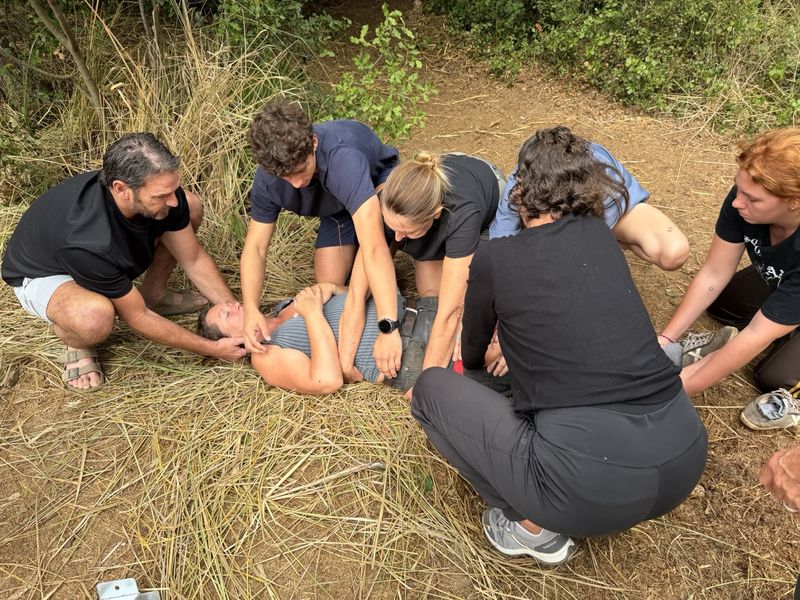
Massive bleeding needs immediate attention
We practised applying firm pressure to control bleeding and using a tourniquet for life-threatening bleeding from an arm or leg that direct pressure can’t control.
Severe bleeding needs sustained direct pressure while help is called. A commercial tourniquet, if available, is an option for uncontrolled, life-threatening limb bleeding, or an improvised piece of material or even a belt. Once applied, record the time and leave removal to healthcare professionals. Practising with the equipment you carry is part of being prepared.
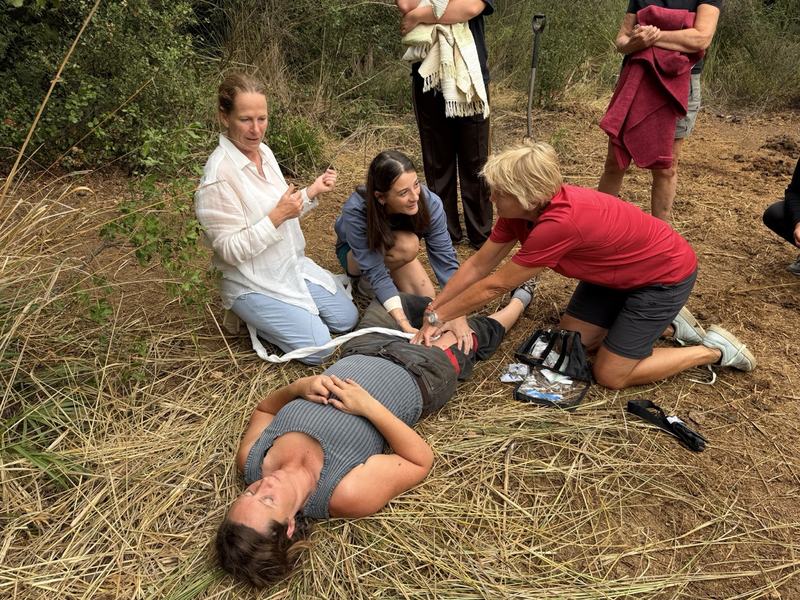
Airway and breathing need repeated checks
Someone who can speak has an open airway at that moment. Keep watching for changes. If they become unresponsive or their breathing changes, tell the emergency call handler immediately. An unresponsive adult with abnormal breathing needs CPR. Gasping can be a sign of cardiac arrest.
Circulation and head injury need careful observation
Shock is described in Amanda’s handout as inadequate blood flow around the body. After a serious injury, blood loss can be a cause. Pale, clammy skin, rapid breathing or increasing confusion are warning signs to report. Following a head injury, worsening drowsiness, repeated vomiting or a seizure also need urgent attention.
Prevent heat loss, even on a mild day
We also talked about keeping an injured person warm. Even on a mild Mallorca day, someone lying still on the ground can lose heat.
Insulation underneath the person matters as well as covering them. A foil emergency blanket helps reduce heat loss, but carries little insulation of its own. Think about shelter from wind, dry layers and protection from the ground, while following advice about safe movement after injury.
CPR and using a defibrillator after a sudden collapse
The afternoon took us to the pool for water rescue practice and CPR. A sudden collapse calls for a different response from the trauma sequence we’d been practising. If an adult is unresponsive, call 112. If they aren’t breathing normally, start CPR and use an automated external defibrillator (AED) as soon as one is available. The emergency call handler can guide you.
For adult CPR, aim for 100-120 chest compressions a minute, 5-6 cm deep, allowing the chest to rise fully between compressions. If trained to give rescue breaths, use 30 compressions followed by two breaths. Otherwise, give continuous chest compressions and follow the dispatcher. Anyone can use an AED by following its prompts.
Why rescue breaths matter after drowning
We also learned why rescue breaths, where you breathe air into someone’s lungs, are especially important after drowning. At the pool, we discussed how to help from the poolside without putting ourselves in danger.
Drowning deprives the body of oxygen. For a person who is unresponsive and not breathing normally after rescue, trained rescuers give five initial rescue breaths, then CPR using 30 compressions and two breaths. If you cannot give breaths, start chest compressions and follow emergency instructions.
Call 112 and summon a lifeguard if available. Help from a secure position on land by offering flotation or reaching with suitable rescue equipment. Entering the water requires training and appropriate equipment.
What to carry in a first aid kit for Mallorca
Amanda Hewson Beaver’s ‘crash bag’ made me rethink what I carry - or rather, what I don’t normally carry. Gloves, dressings, an emergency blanket (very thin, shiny material that packs down like a disposable rain cover) and a small notebook and pen suddenly seemed well worth the space. Pack an EpiPen if you have one, too.
A compact kit for an outing could include disposable gloves, sterile gauze and absorbent dressings, a bandage, tape, blister care, blunt-ended scissors and an emergency blanket. Add a charged phone, offline navigation and a waterproof pouch. Choose specialist items, such as a tourniquet or resuscitation mask, around your training and the activity. Check expiry dates and replace anything used.
If you have been prescribed an adrenaline auto-injector such as an EpiPen, or a reliever inhaler, carry it as advised and let companions know where it is. Ask your clinician or pharmacist about storage and use. A first aid course can help companions recognise when these medicines may be needed.
What to say while you wait for help
One of the lessons that stayed with me was about talking to the injured person. ‘You’ll be fine’ is probably what I’d have said instinctively. Amanda Hewson Beaver encouraged us to tell people what we actually know. We can say that this is a difficult situation but we’ve got some training and have sent for help. Explain what you’re doing and keep talking to them. There’s something reassuring about being told what’s happening when you can’t see it for yourself.
“There’s something reassuring about being told what’s happening when you can’t see it for yourself.”
There is practical value in keeping a simple written record too. Note when the incident happened, what you observed, what you did and any changes. The workshop’s prolonged-care section includes wounds, splinting, burns and pain. Medicines such as antibiotics should only be given on remote medical advice. Continued observation and a clear handover remain part of the job while you wait.
Why hands-on first aid practice made the difference
There was a delicious lunch, homemade cake later on and a few surprise scenarios designed to catch us off guard. They did. I could follow the order quite happily in the shala, but it felt different when I had to decide what to do without being prompted. It also made me think about how much I had forgotten of even the basics since school, and how valuable updated training can be.
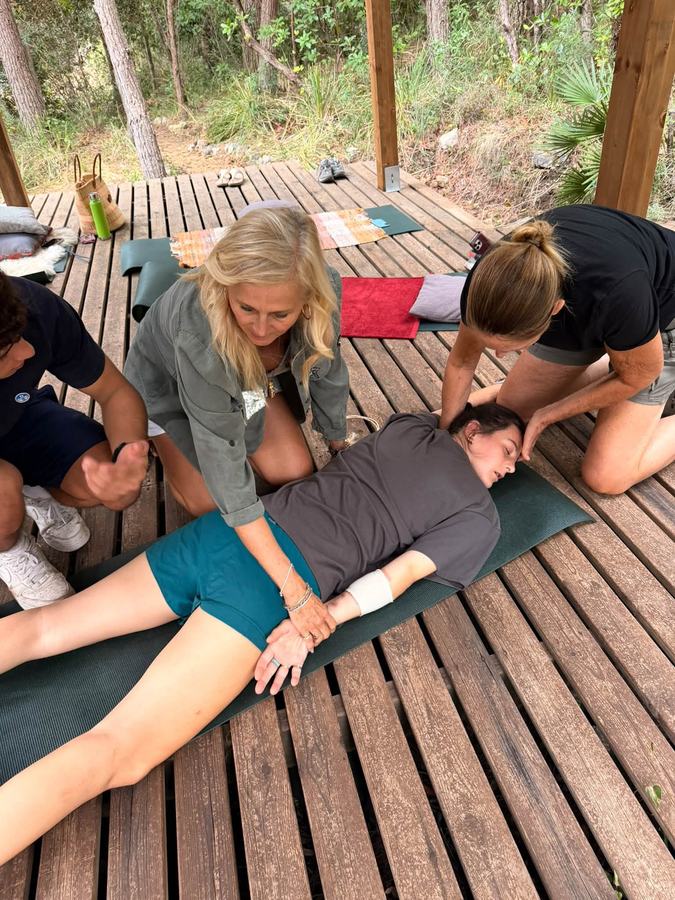
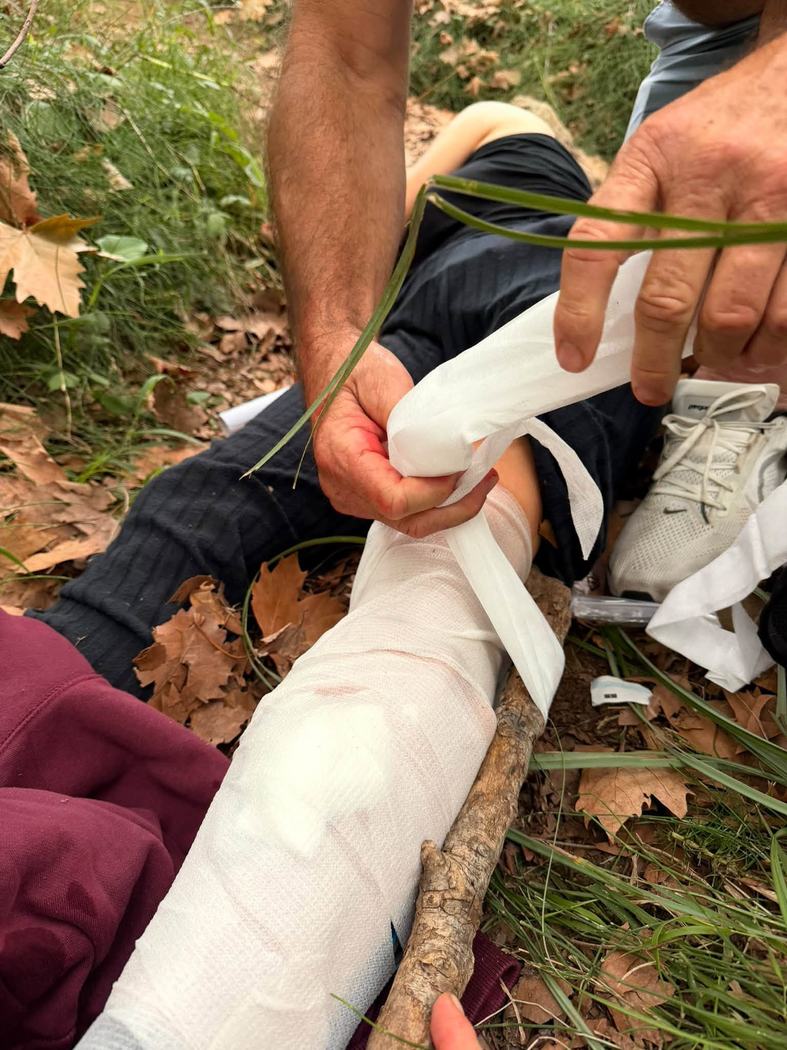
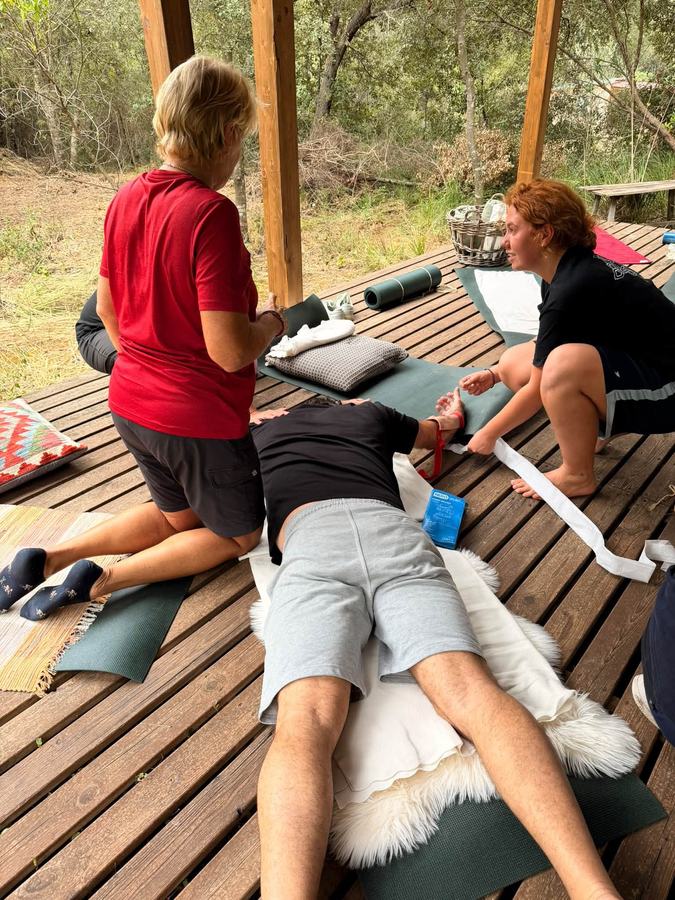
The handout recommends revisiting the kit every few months and walking through a scenario with your group before a trip. That seems a manageable way to keep the day’s learning alive. A bandage still in its wrapper is easy to overlook until you need to open and use it in a hurry.
I’d happily recommend a hands-on first aid course, whether you spend your weekends on the water, on a bike or at home with family. I can see why Amanda recommends practising between courses. I’d rather find out what I’ve forgotten in a practice session near Artà, with a cup of tea and a piece of homemade cake waiting afterwards.
You can find our more about Amanda Hewson Beaver's Extreme First Aid courses on Instagram at @amandajbeaver, and to find out more about Lizzie Graham’s retreat near Artà @wildridelizzie.
When was the last time you refreshed your first aid skills? Do you feel equipped to cope if there was a medical emergency? Please share your thoughts in the comments below.
Key Takeaways
- In Mallorca and across Spain, call 112 early and be ready to explain exactly where you are.
- S-MARCH gives you an order to follow after a serious injury: scene safety, massive bleeding, airway, respiration, circulation, then hypothermia and head injury.
- For a sudden collapse, call 112, start CPR and use an AED as soon as one is available.
- Keep an injured person warm, with insulation underneath them as well as on top.
- Gloves, dressings, an emergency blanket and a notebook, plus an EpiPen if you have one, are well worth the space in your bag.
- Tell an injured person honestly what is happening, and keep talking to them.
- Practise regularly, because a rehearsed skill is far easier to use under pressure.
When did you last refresh your first aid skills, and would you know what to do if a friend came off their bike or fell on a trail? I’d love to hear your experiences, so do share it in the comments below.
Read & add your comment ↓Further Inspiration:
What’s On Mallorca Guide · Mallorca Retreats Guide · 6Points Cycling Challenge · Healthy Everyday Habits

As featured in the Mallorca Bulletin
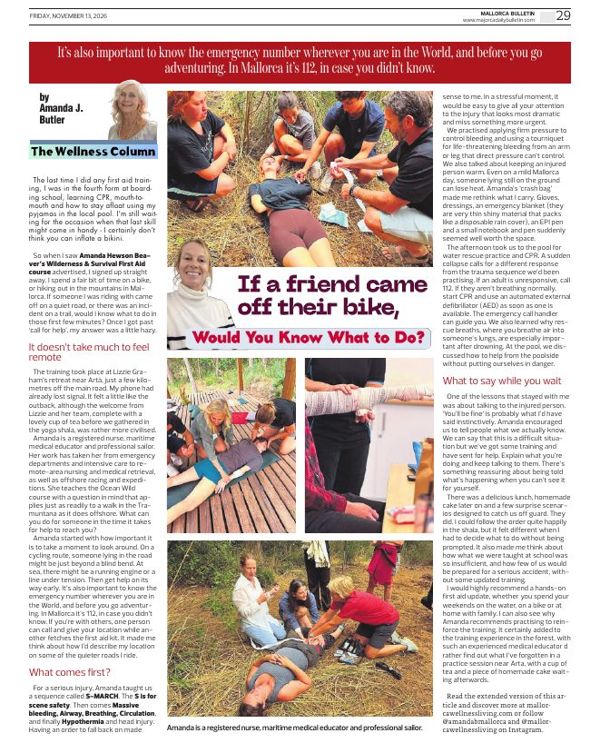
This article first appeared in Amanda’s Wellness Column in the Mallorca Bulletin. Read the original as a PDF →
Sources and Further Reading
- Emergency numbers in Spain, including 112. Spanish Government, administracion.gob.es.
- First Aid Guidelines. Resuscitation Council UK, 2025.
- Adult Basic Life Support Guidelines. Resuscitation Council UK, 2025.
- Guidelines for First Aid. American Heart Association and American Red Cross, 2024.
- Special Circumstances Guidelines, including drowning. Resuscitation Council UK, 2025.
- Recycling medicines at the Punto SIGRE in your pharmacy. SIGRE.
Frequently Asked Questions
What is the emergency number in Mallorca?
Call 112 for an emergency in Mallorca and throughout Spain. Calls are free and no country code is needed, including when using a foreign mobile. Give your location and follow the call handler's instructions.
What is wilderness first aid?
Wilderness first aid prepares people to care for injury or illness when professional help may be delayed. It combines immediate lifesaving priorities with ongoing observation, communication and evacuation planning.
What does S-MARCH mean in first aid?
On the Wilderness First Aid Essentials course, S-MARCH stands for scene safety, massive bleeding, airway, respiration, circulation, and hypothermia and head injury. It is a framework for prioritising care after a serious injury.
Do I need training to use an AED?
Anyone can use an automated external defibrillator by following its spoken and visual instructions. In a suspected cardiac arrest, call 112, start CPR and use an AED as soon as one is available.
What should I carry in a first aid kit for hiking or cycling in Mallorca?
A compact kit could include disposable gloves, sterile dressings, a bandage, tape, blister care, blunt-ended scissors, an emergency blanket and a notebook and pen. Pack an EpiPen if you have one, and carry a charged phone with an offline map.
How can I make my first aid kit more sustainable?
Check your kit every few months and restock only what has been used or has expired, rather than buying a whole new kit. Choose a durable, refillable pouch, and take expired or unused medicines to the Punto SIGRE collection point in a Spanish pharmacy rather than throwing them away.
Where can I find wilderness first aid training in Mallorca?
This article describes my experience on Amanda Hewson Beaver's Wilderness First Aid Essentials course near Artà. For current dates, course content and availability, contact Amanda through Instagram at @amandajbeaver.
Disclaimer: This article is for general information only and is not medical advice or a substitute for a recognised first aid course. Where guidance is referenced, the sources are linked for you to explore. Always talk to a qualified healthcare professional about your own situation, as individual needs vary.
0 Comments