


I am often asked what my secret is for my vitality and general healthful demeanour, and I would say it is really my overall wellness mindset. So many of you have since requested my tips that I have consolidated them here as best I can. This isn't meant to overwhelm; think of it instead as a gentle, step-by-step guide to lowering your toxic load, without the fear.
Wellness doesn't have to mean expensive supplements, complicated biohacking or completely overhauling your life. Sometimes it's the small things we do, day after day, that add up.
Over the years, researching health and wellness, and writing this column, has changed many of my habits. Open my kitchen cupboards or bathroom cabinet and you will probably find evidence of another rabbit hole I have disappeared down.
But I don't believe wellness should become an obsessive quest for perfection. We are constantly exposed to pollutants, plastics and an extraordinary cocktail of chemicals. Scientists increasingly study our lifetime environmental exposures under the term the exposome, and the total burden of these exposures is sometimes called our toxic load. It is worth remembering, though, that finding a chemical in the body, or knowing it can be absorbed, is not the same as proving it has caused harm, and that here in the EU our cosmetics and food packaging are regulated more tightly than in many countries.
We cannot control everything. But where there is a simple way to reduce an unnecessary exposure, or to introduce a healthier habit, I tend to think: why not?
So here are some of the little things I do. You don't need to take them all on at once, but if you address a few a week, your toxic load will lessen, which can mean less illness later in life.
My Morning Routine
Before reaching for coffee, I start Ayurvedic-style with a glass of warm water (it can also be room temperature if you prefer). Then I move.

It doesn't have to be a full workout. Stretch, mobilise your joints, walk, cycle, or practise a few yoga poses, just enough to remind your body that the day has begun, and try to get your heart beating a little faster. Better still, get outside. Morning daylight helps regulate our circadian rhythm, supporting alertness during the day and sleep later that night.
And coffee? I adore it, but I make myself wait. Caffeine can temporarily increase cortisol, although the popular '90-minute rule' for delaying your first cup is much debated and far from proven. But I prefer to hydrate and let my body wake naturally first, and the coffee tastes all the better for the wait. A small tip: I choose 100% Arabica, organic where I can, for the flavour and to sidestep the heavier pesticide load of cheaper blends.
Rethink Your Kitchen
Take a look at what your food touches.
I have become increasingly wary of unnecessary plastic, particularly when heat is involved. I favour glass food containers, I avoid heating food in plastic, and I threw my microwave out. It is worth swapping other kitchen plastics too: kettles, reusable water bottles (unless BPA free), cooking utensils, and the worst culprit, plastic chopping boards. A 2023 study estimated that a single plastic board can shed tens of millions of microplastic particles a year, although, reassuringly, the same researchers found no measurable effect on cell survival, so this is a sensible swap rather than a cause for alarm. Regulators are also increasingly cautious about BPA, a hormone-disrupting chemical that leaches more readily with heat; the EU has moved to restrict it in food packaging, and it is worth knowing that BPA-free plastics may simply use close chemical cousins.
Then there are our pans. Damaged non-stick cookware goes in my bin, and I now avoid it altogether. Non-stick coatings such as Teflon belong to the PFAS family, the so-called forever chemicals; the worst offender, PFOA, was removed from manufacture around 2013, and the genuine risk is overheating an empty (or scratched) pan rather than ordinary cooking. I prefer stainless steel, cast iron, carbon steel, glass or enamelled cookware. Stainless steel, incidentally, is one of the safest and most inert surfaces there is, whatever alarming posts online may claim.
And salt? This is more complicated than social media would have us believe. But to me, a natural form of sea salt is healthier than the more processed table salt, which is more often than not bleached. Iodine matters for thyroid health, and while iodised table salt can be an important source of it, I choose to take iodine separately. I prefer good-quality, minimally processed sea salt, and the island we live on produces a lovely version in Flor de Sal.
Filter Your Water, Intelligently
Hydration is one of the simplest wellness habits, particularly living somewhere as hot as Mallorca. There is no definitive rule, though: how much water we need varies with our size, diet, exercise, health and the temperature. Two litres a day is a reasonable amount to aim for, but let thirst be your guide (unless you are one of those people who never get thirsty). But remember - teas, milk, juices and carbonated drinks do not hydrate.

I filter my drinking water, but filters aren't all equal. Activated carbon is good for chlorine, taste and many pesticides, but it leaves minerals in and doesn't remove everything. Reverse osmosis strips almost everything, including beneficial minerals, which is why the better systems add them back. So understand what your system actually does, rather than assuming all filtered water is good quality. It is worth the research, and getting your water tested too.
Become a Bathroom-Cabinet Detective
Our skin is our largest organ and an extraordinarily effective barrier, but some substances applied to it can be absorbed, depending on the ingredient and formulation, and rather more so on thin skin or with leave-on products used daily. So I have gradually simplified.

I favour bar soap over liquid at home, fewer plastic bottles and often simpler formulations, and liquid soaps more often contain parabens and preservatives. I choose my toothpaste carefully (mine is fluoride free, much to the dismay of my dentist, though you can read why in my Nitric Oxide article), use an aluminium-free natural deodorant, and scrutinise moisturisers, shampoos, sunscreen and cosmetics. I buy as natural as I can: I use Tropic and Lavera, though some more mainstream brands such as Clinique and No7 have items with fewer chemicals. Check them with your Yuka app.
Does current evidence prove that aluminium antiperspirants cause breast cancer? No. Major cancer organisations, including Cancer Research UK and the American Cancer Society, say no convincing link has been established. There are still open scientific questions around some ingredients used repeatedly in personal-care products, so when there is an alternative I enjoy using, I choose the precautionary route, more from preference than fear.
Apps such as Yuka, and resources such as EWG Verified, are genuinely useful for checking ingredients; the EWG Verified mark also requires a product to fully disclose what is in it.
Perfume: What Is Behind the Word Fragrance
This is one I have only recently started paying real attention to, and it surprised me. On most perfumes, a single word, fragrance or parfum, is legally allowed to stand in for a whole mixture of undisclosed ingredients, because scent formulas are treated as trade secrets. A label can be perfectly legal and still tell you very little about what you are spraying on your skin. The EU is stricter than most, requiring known fragrance allergens to be named, but a great deal still hides behind that one word. The ingredients most often raised are phthalates, used to help scent last, several of which are restricted in EU cosmetics. Whether everyday perfume causes real harm is debated rather than proven, so I won't overstate it, but I now lean towards natural perfume or fully-disclosed perfumes, and my favourite trick costs nothing: spray perfume onto your clothes rather than directly onto your skin.

Sunscreen: Protect Yourself, but Choose Carefully
Living in Mallorca makes sun protection non-negotiable, and let me be clear, the established risk here is skin cancer, so please keep using sunscreen. It isn't the only answer, though: shade, hats, avoiding burning and being sensible about peak UV hours matter too.
Some sunscreen ingredients are absorbed into the body, which has prompted further research, but it is worth knowing what that research actually showed. The filters were measured in the blood above a regulatory threshold, and that threshold is the level at which authorities ask for more testing, not one at which harm is known to occur; the firm advice remains to keep using sunscreen. I check individual formulations rather than buying by brand name, since ratings vary product by product, and I consider environmental impact too, as there are numerous good brands sympathetic to sea life. I particularly like SVR Sun Secure, and Caudalie is sold locally in select pharmacies. The Yuka app is ideal for checking your own.
Clean Up the Air Around You
One of the easiest changes? Stop trying so hard to make your home smell artificially clean. Air fresheners, fragranced sprays and some cleaning products release volatile compounds into indoor air, which is often more polluted than the air outside. Keep your rooms, particularly bedrooms, ventilated, and if you love a scent, a diffuser with good essential oils, used sparingly, is gentler than a plug-in.

I also favour simpler cleaning products, but beware the word natural, which has almost no legal meaning: a product can call itself natural while containing only a token natural ingredient. Interestingly, even green and essential-oil sprays release these compounds, so ventilation matters more than the label. I now make my own, which is easy (message me if you would like the recipe, or search online). Use your kitchen extractor and reduce unnecessary fragrance rather than adding more. We spend an enormous proportion of our lives breathing indoor air, yet rarely think of it as part of our wellness.
Move More, Not Just at the Gym
Exercise is important. Movement is important too. Walk after a meal. Take the stairs. Cycle instead of driving. Stand up from your desk every hour. Stretch or squat while the kettle boils.

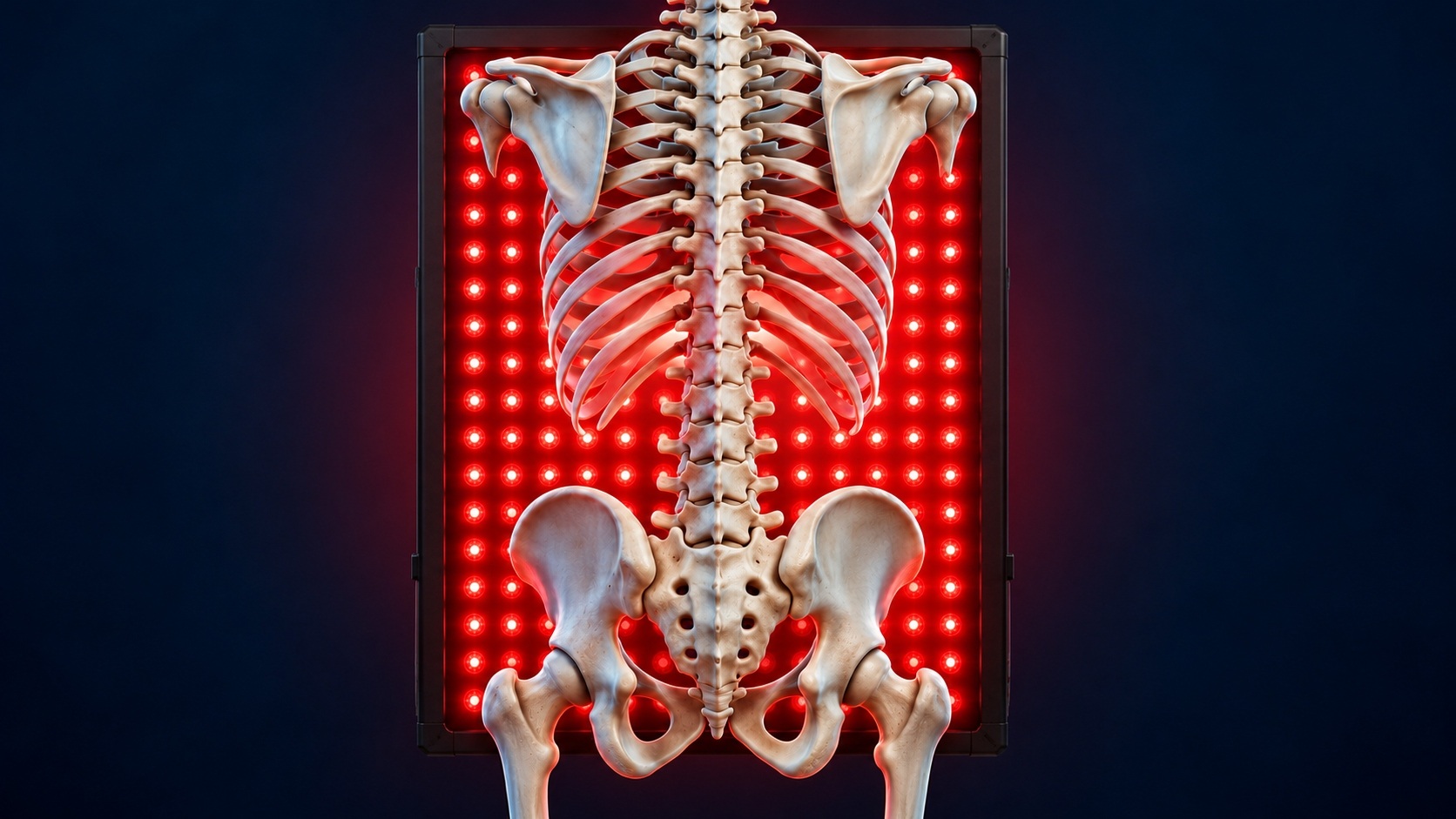
Include cardiovascular exercise, but don't forget strength. Maintaining muscle becomes increasingly important as we age, and, as anyone who has followed my recent bone-health series will know, resistance and impact exercise matter enormously for our skeleton too.
Good Sleep Is Essential for Good Health
Good sleep starts long before your head hits the pillow. I try to finish my main meal around three hours before bed, which gives me time to digest and helps if you are prone to reflux, then I turn down the lights and reduce screens in the final hour. I confess to using blue-light-blocking screen protectors, though honesty compels me to admit that a 2023 Cochrane review found little evidence they actually help, which rather supports dimming the lights and putting the phone down over buying the filter.

Take the television out of the bedroom. Charge the phone elsewhere. Read, meditate, listen to gentle music, and keep the bedroom cool and dark. And if switching off the Wi-Fi router stops you disappearing down one last internet rabbit hole at midnight, switch that off too. Some people worry about EMFs, the electromagnetic fields from our devices; the evidence for harm at everyday levels is controversial and varies by source, but I personally like to switch mine off at midnight and back on at 7am. Even if it only helps me psychologically, that is good enough for me.
And Finally: Don't Forget to Live
Not a little, but a lot! Perhaps the most important wellness practices aren't found in an app, a supplement bottle or a bathroom cabinet.
Get outside. See daylight. Spend time in nature, put your bare feet on the grass. Eat with people. Laugh. Hug someone. Meditate. Breathe. Call a friend. Go to the seaside. Smile. Be grateful for the life we lead, and for living where we live, with so much more freedom, facilities and quality of life than many others in the world.
Naturally, our relationships, our nervous systems and our sense of connection matter too.
None of us is going to live a perfectly clean life, and trying to would probably create enough stress to defeat the object. You have got to live a little too. I think about reducing what I reasonably can, adding more of what supports my health, and letting lots of small choices accumulate over time.
Because perhaps everyday wellness isn't about doing everything perfectly. It is simply about doing a few things better, more often.
Key Takeaways
- Detection is not harm: an absorbed substance is not proof of damage.
- Keep heat away from plastic; favour glass, stainless steel and wooden boards.
- Non-stick is fine if you never overheat it; stainless steel does not harm your organs.
- Keep your iodine covered, whether through iodised salt or a supplement.
- Drink to thirst; know whether your filter is carbon or reverse osmosis.
- Check leave-on products with the Yuka app or EWG.
- Antiperspirants and breast cancer: no convincing link. Choose aluminium-free by preference.
- Read past the word fragrance, and spray perfume on your clothes.
- Keep using sunscreen; absorption is proven, harm is not.
- Ventilate rather than perfume the air; natural is unregulated.
I would love to know: which of these small changes have you already made, and which feels like your next easy swap? And do you have any tips of your own to share?
Further Inspiration: the invisible power of nitric oxide · anti-ageing seeds worth eating

As featured in the Mallorca Bulletin
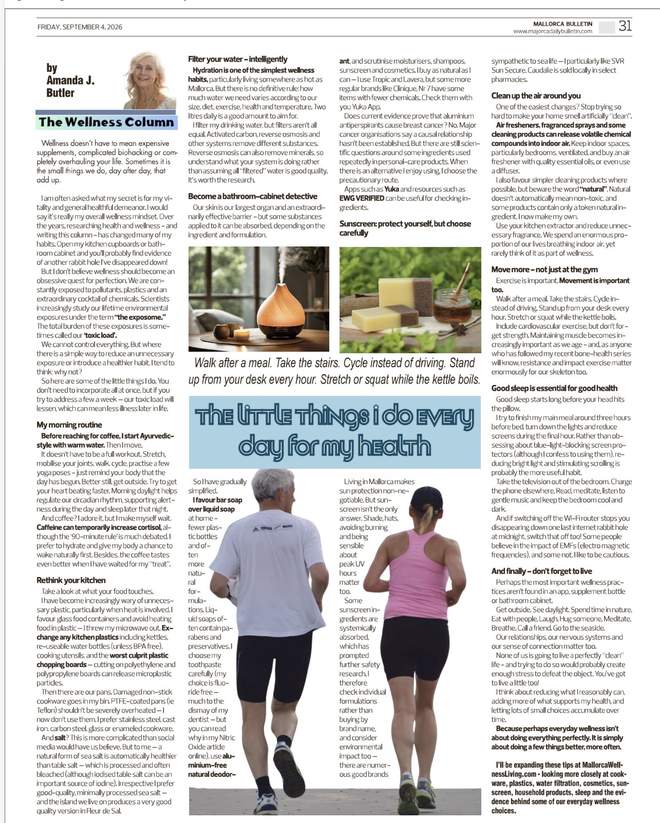
A shorter version of this article first appeared in Amanda’s Wellness Column in the Mallorca Bulletin. Read the original as a PDF →
Sources and Further Reading
I have deliberately left out the more sensational blogs and drawn instead on cancer charities, regulators, peer-reviewed studies and major medical centres.
- Do cosmetics cause cancer? (antiperspirants and deodorants). Cancer Research UK.
- Antiperspirants and Breast Cancer Risk. American Cancer Society.
- Cutting Boards: An Overlooked Source of Microplastics in Human Food. Environmental Science & Technology, 2023.
- Bisphenol A in food is a health risk (lowered tolerable daily intake). European Food Safety Authority, 2023.
- Effect of Sunscreen Application on Plasma Concentrations of Sunscreen Active Ingredients (Matta et al.). JAMA, 2020.
- Results of the second sunscreen absorption study. US FDA, 2020.
- Fragrances in Cosmetics. US FDA.
- Blue-light filtering spectacle lenses for visual performance, sleep and macular health (Singh et al.). Cochrane, 2023.
- Are Blue Light-Blocking Glasses Worth It? American Academy of Ophthalmology.
- Water: how much should you drink every day? Mayo Clinic.
- Do sea salt, kosher salt and pink salt beat table salt? Cleveland Clinic.
- Is it bad to eat before bed? Cleveland Clinic.
- EWG Verified. Environmental Working Group.
- Yuka: the app that scans your products. Yuka.
Frequently Asked Questions
Do antiperspirants cause breast cancer?
Cancer Research UK and the American Cancer Society say no convincing link has been established. Some people still prefer aluminium-free deodorants as a personal choice, but there is no need to feel anxious about using an antiperspirant. Try a more natural deodorant.
Is sea salt healthier than table salt?
The difference is small: by weight the sodium is almost identical. Iodised table salt does have one real advantage, iodine, which is essential for thyroid health, but try to avoid the bleached varieties. I prefer natural sea salt flakes.
Are non-stick pans safe to use?
For everyday cooking, yes. Modern non-stick is made without the old PFOA chemical; the key is not to overheat an empty pan. If you would rather avoid the question, stainless steel, cast iron and glass are excellent, and stainless steel does not harm your organs, despite what some sites claim.
Do blue-light screen protectors improve sleep?
The evidence is weak. A 2023 Cochrane review found little benefit. Dimming the lights and putting the phone down in the evening is far more effective than any filter.
How can I tell if a cosmetic or sunscreen is a good choice?
Scan it with the Yuka app or look it up on EWG. The EWG Verified mark is stricter and also requires full ingredient disclosure. Remember, too, that EU-regulated products are already held to tighter standards than many elsewhere.
What is the most eco-friendly swap here?
Reducing plastic in the kitchen and choosing reef-friendlier, mineral sunscreens are two of the most worthwhile, protecting both your home and the sea around Mallorca that we are lucky to share.
Disclaimer: Amanda is a wellness writer, not a medical professional. This article is for general information only and is not medical advice. Where research is referenced, the sources are linked for you to explore. Always talk to a qualified healthcare professional about your own situation before making any changes, as individual needs vary.
Lots of easy hints and advice – thank you Amanda, once again
You’re very welcome – if you have any healthy hints please do share – would love to add a MWL Community Healthful Hints section 🙂