

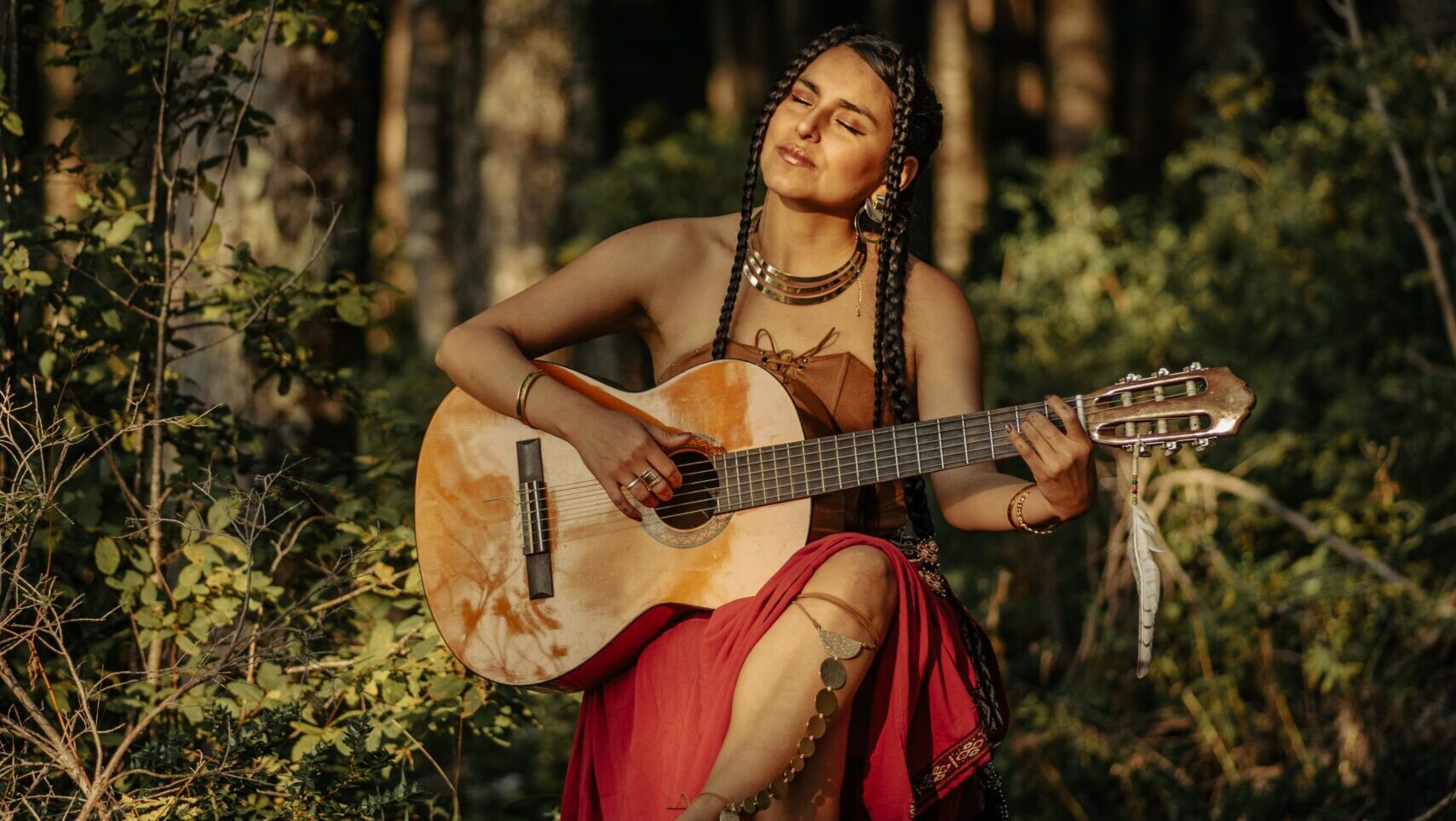
An interview with indigenous environmental advocate Coral Herencia, during her La Voz del Bosque Mallorca Fundraising Tour 2026
🌿 La Voz del Bosque - Concert & Ceremony Experience in support of the Palguín Native Forest & Waters, southern Chile
📍 Sol de Agartha, Esporles, Mallorca | 📅 Saturday 20 June 2026 | 🕕 18:00 hrs
🎟️ Book your place | 🎶 Listen on Spotify
There is something rather beautiful about the idea of a forest having a voice.
Not the rustling of leaves in the wind or the chorus of birdsong that fills the canopy at dawn, but a deeper voice - one that speaks of connection, reciprocity and our relationship with the natural world. It is a voice that Coral Herencia has dedicated her life to listening to.
An indigenous woman from the Andes and Amazon regions of Peru, Coral describes herself as a guardian of the Earth and its waters. Part archaeologist, part environmental educator and part cultural bridge-builder, she is currently travelling across eight European countries with her project La Voz del Bosque - The Voice of the Forest, raising awareness and funds to protect some of the world's most precious remaining native forests.
Her tour brings her to Mallorca this weekend, with a concert and ceremony experience at Sol de Agartha in Esporles. I was fortunate to spend time in conversation with her ahead of the event, and what she shared has stayed with me in the way that only the most honest conversations tend to do.
Who Is Coral Herencia?
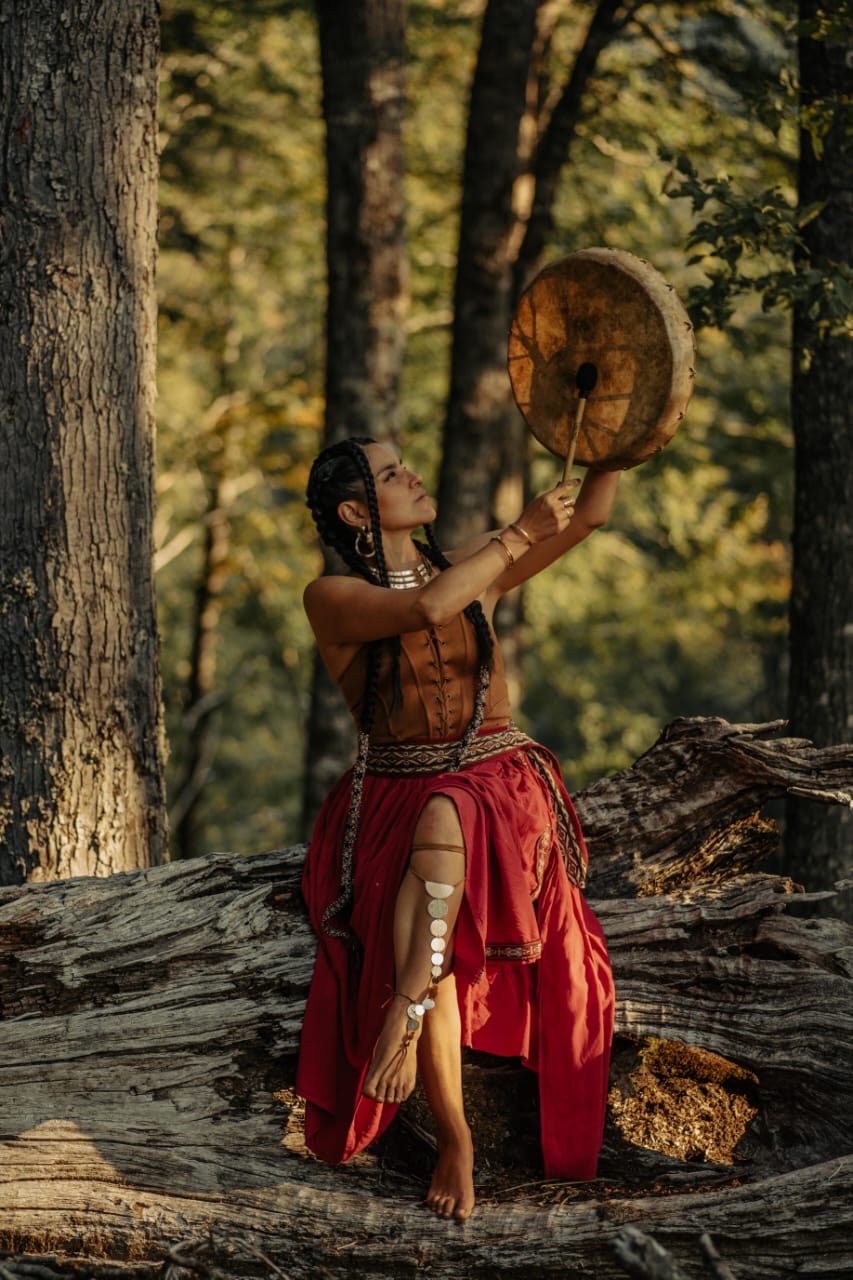
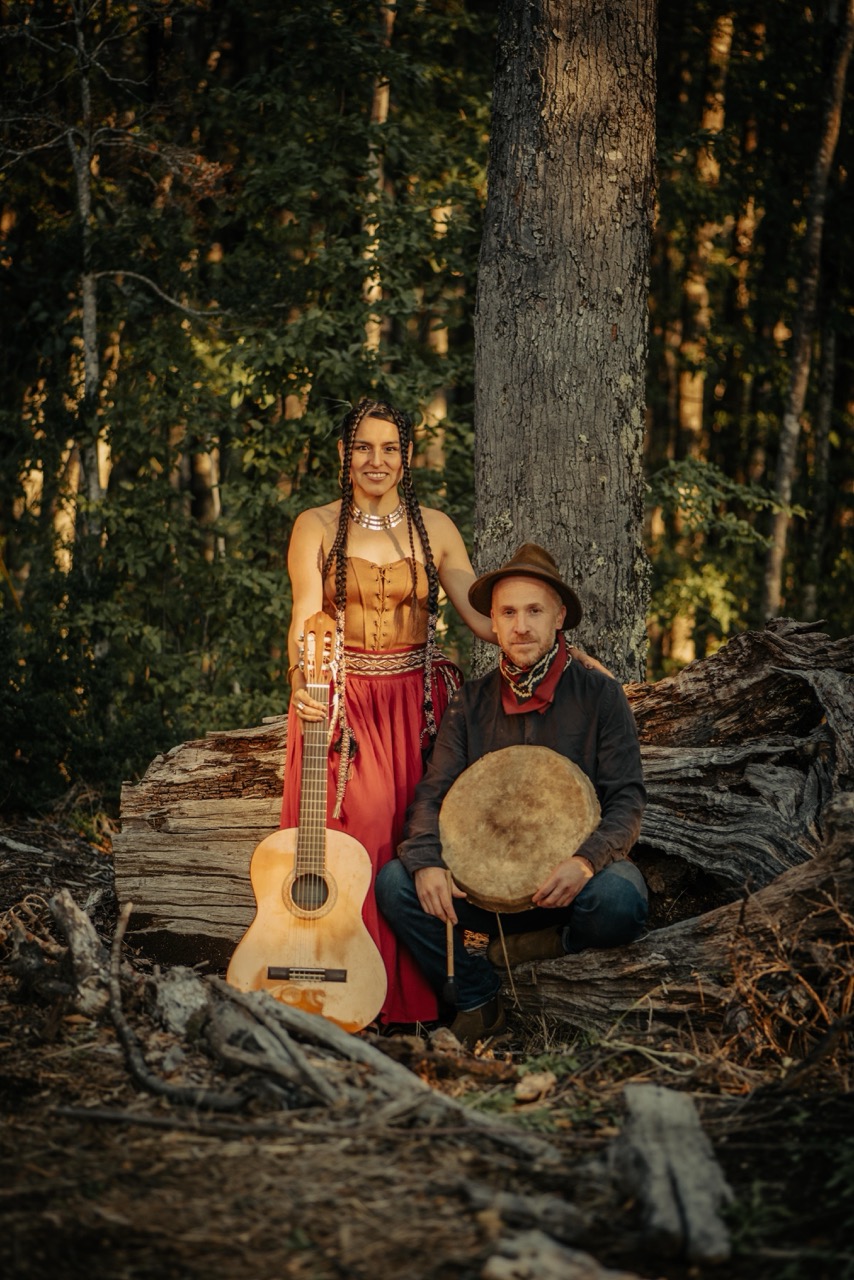
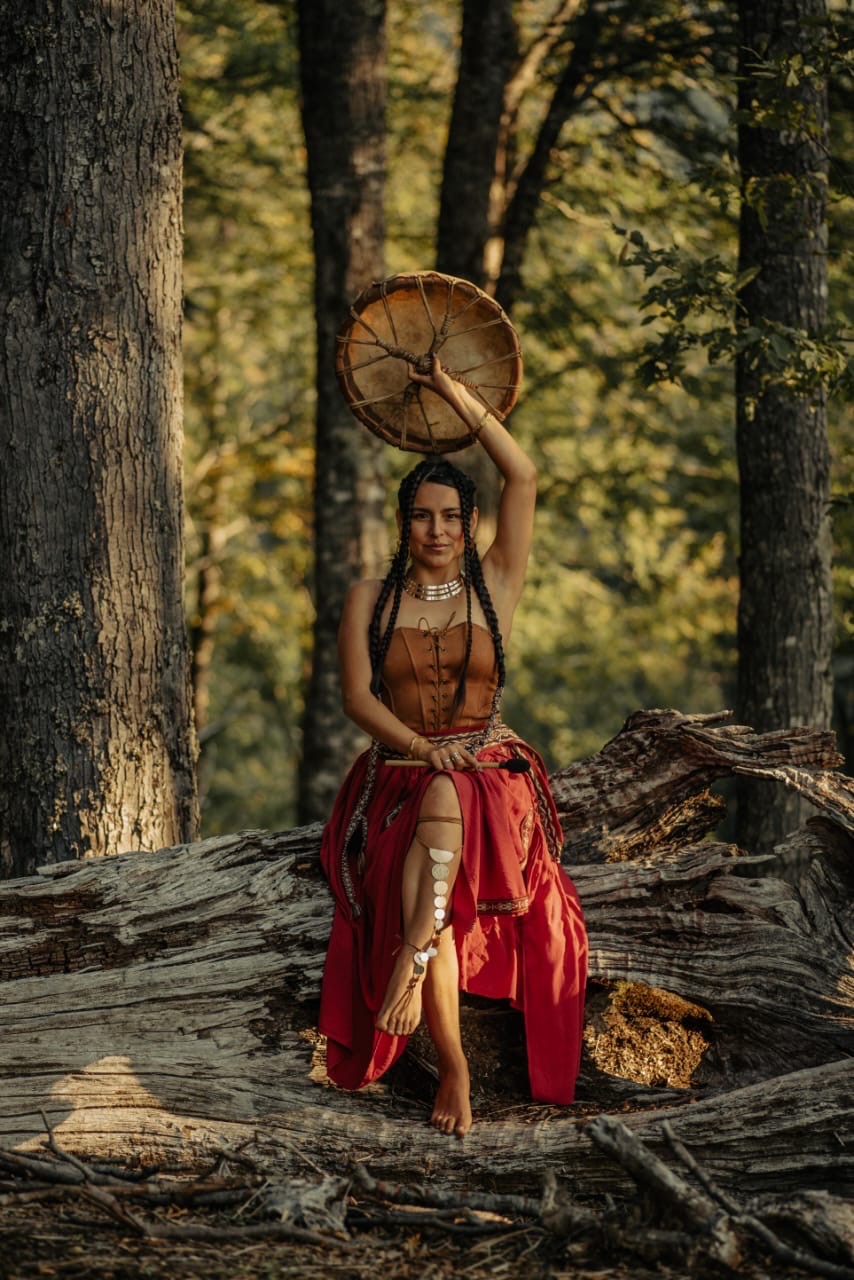
For readers who don't know you, how would you describe your work and your purpose in life?
My name is Coral Herencia. I am an indigenous woman from the Andes and the Amazon of Peru. From a very young age, I felt a deep connection to my roots and the vital forces of Mother Nature. Since then, I have dedicated my life to caring for them, reconnecting with their ancestral wisdom, and finding ways to build relationships that allow us, as humanity, to return to them.
I studied archaeology, but above all I consider myself a guardian of the Earth and its waters. My mission is to contribute to the remembrance that we are part of a great living system - and that our health and wellbeing depend on the quality of our relationship with nature.
What was the first thing that drew you to this path of working with nature, indigenous wisdom and environmental protection?
I think it was a combination of my memory of my roots and a deep sensitivity to life. From a young age, I felt a very strong connection to landscapes, rivers, forests and mountains. Over time, I realised that indigenous wisdom preserves essential knowledge about how to live in harmony with nature - and how to understand ourselves as part of it, not separate from it.
Today, my path consists of building bridges between ancestral wisdom, culture, art, the protection of ecosystems and the regeneration of our relationship with the Earth.
The Forests of Palguín: Why They Matter to All of Us
At first glance, the temperate rainforests of southern Chile may seem a long way from Mallorca. After all, what does a forest thousands of kilometres away have to do with life on a Mediterranean island.
According to Coral, everything.
Could you tell us about Palguín and why it is so important?
Ten years ago, life led me to discover the native forests of southern Chile. What I experienced in that territory was so profound and transformative that I felt called to dedicate my life to learning to be a woman of the forest.
These temperate rainforests - also known as cold forests - are among the last remaining primary or ancient forests on Earth. If we understand Mother Earth as a living body, then each ecosystem is one of its organs. The forests are both its lungs and the heart from which the water that sustains life is distributed.
They are also home to extraordinary levels of endemism - species that exist nowhere else on the planet. One example is the monito del monte, a small marsupial considered by science to be a living fossil, whose evolutionary history dates back tens of millions of years. Its existence reminds us of the irreplaceable value of these ecosystems.
"Amid the ecological crisis we are experiencing as humanity, these forests represent some of the last healthy lungs on the planet. Their protection is not only a local responsibility - it is a global responsibility."
The Flying Rivers: How a Forest in Chile Affects Our Water Cycle
Scientists now speak of flying rivers - vast atmospheric currents of moisture generated by forests that travel thousands of kilometres, regulating rainfall and water cycles across entire continents.
Why are the protection of forests and the protection of water so closely connected?
Because forests and water are part of the same living system. Ancient stories tell us that it is the forest that calls the water. I like to imagine it as an ancient song - the forest sings and the water responds.
The rains reach the mountains, where they are received by trees and living soils, which feed aquifers, springs and sources. Then the forests release moisture into the atmosphere and contribute to the formation of clouds that continue the water cycle. That same water returns to the sea via rivers, where the cycle begins again.
Today, science explains these processes through concepts such as evapotranspiration and hydrological cycles. But ancient peoples already understood that forests and water were inseparable. Protecting forests means protecting the systems that make the water cycle possible - and with it, the continuity of life.
What a Forest Really Is: A Community of Life
Many of us have walked through a forest and noticed the trees. Few of us have truly seen what is happening. Coral's description changed the way I think about the landscapes I walk through here in Mallorca - whether in the Serra de Tramuntana your Tramuntana or beside the island's coastal pine forests.
What do you see when you walk through a forest?
When I walk through a forest, I don't just see trees. I see a living community formed by multiple layers and relationships.
I see a living soil full of microorganisms, fungi and underground networks that support all the life that emerges above it. I see the understorey - that often invisible world where countless species find refuge. I see young trees, pioneer trees and ancient trees that form the upper canopy. I see birds that disperse seeds, insects that pollinate, mosses, lichens, ferns, mammals and invisible rivers of nutrients.
A forest is a complex ecological intelligence that has been woven over thousands of years. This is why an ancient native forest is very different from an artificial tree plantation. It is a complete ecosystem - a deeply interdependent community of life.
Disconnection, Wellness and the Ancestral Memory Within Us
As someone who writes regularly about wellness and conscious living in Mallorca, I found what Coral said next particularly resonant.
Do you think we have lost our connection with nature in the modern world?
Yes. I believe that one of the deepest causes of the crisis we are experiencing is our disconnection from nature. When we stop feeling part of the Earth, we begin to relate to it solely as a resource. However, that connection never disappears completely. It lives within us as an ancestral memory.
That is why our work focuses on creating spaces where people can reconnect with nature, their sensitivity, and the deep understanding that human life and the life of ecosystems are inseparable.
If more people saw the Earth as a living being rather than a resource, how might our lives change?
We would begin to relate to it from a place of gratitude rather than extraction. From reciprocity, not exploitation. We would understand that caring for nature is also caring for ourselves. It would be more than an environmental transformation - it would be a cultural, ethical and spiritual transformation.
Nature, Wellbeing and What the Forest Has Taught Her
More and more research now points towards the benefits of spending time in nature. Forest bathing, grounding, sea swimming and simply walking outdoors have all been shown to reduce stress, calm the nervous system and improve mental wellbeing.
Coral sees these benefits not as separate from nature but as evidence of our deep relationship with it.
What role does nature play in our physical, emotional and spiritual wellbeing?
Nature plays a fundamental role, as human and natural wellbeing are inextricably linked. Walking through a forest, watching the sunrise, swimming in the sea or sitting by a river are deeply therapeutic experiences. Nature heals because it reconnects us with our original state.
In places like Palguín, it is still possible to experience ecosystems in a state of great purity. Breathing in that air, listening to the sounds of the forest, feeling the presence of clean water - it generates a sense of wellbeing that is difficult to describe. It is as if our body remembers something essential.
What has the forest taught you personally?
The forest has taught me collaboration, patience and humility. It shows us that life thrives thanks to cooperation, not only competition. It teaches us that the most important processes require time, and that we are part of a much bigger story than ourselves.
Simple Practices for Reconnecting with Nature - Wherever You Are
In a world dominated by noise and distraction, Coral's advice for reconnection is refreshingly simple - and entirely accessible from Mallorca's remarkable natural landscapes.
For someone living in Mallorca, what simple practices would you recommend to help reconnect with nature?
I would invite people to visit natural spaces with presence and respect. Walk by the sea, contemplate the mountains, listen to the wind, and practise small acts of gratitude.
For those who feel lost or rootless, I would suggest something very simple: get close to nature, introduce yourself, and speak from the heart. Then keep silent and listen. Often, it is in this simple encounter that a deep process of reconnection begins.
In today's fast-paced world, many people feel disconnected or overwhelmed. How can spending time in nature help restore balance?
My recommendation is very simple: go to the nearest natural space you have. Walk slowly. Breathe. Observe. Listen. Gradually, your mind will calm down and your body will regain its natural rhythm. When we stop being trapped in our thoughts and reconnect with the world around us, a deeper sense of balance emerges.
"Go to the nearest natural space. Walk slowly. Breathe. Observe. Listen."
- Coral Herencia
La Voz del Bosque: More Than a Concert, More Than a Ceremony
Why did you call this project La Voz del Bosque?
La Voz del Bosque stems from a very simple question: who is listening to the forest? We live in a culture where we constantly listen to each other, but we rarely stop to listen to what nature is trying to tell us. Our tour was created precisely to help the forest be heard.
Through art, music, culture and community events, we aim to translate that voice and bring it closer to people. We want the biological, ecological, cultural and spiritual power of these forests to touch the hearts of those who participate - and awaken the desire to get involved in their protection.
What can participants expect to experience at the event in Mallorca?
The event is an invitation to experience a deep connection with nature, culture and collective purpose. In Mallorca, we will hold a solidarity concert that begins with a ceremony of gratitude to Mother Earth and continues with a musical journey inspired by the messages received in the forests.
Our aim is to touch people's hearts, raise awareness and remind them that we are all part of the same life network.
Why is music such a powerful tool for connection?
Music is one of the most universal languages that exists. I work with songs that have emerged from my relationship with nature - songs I have received over years of living with the forests, rivers and mountains. They contain messages from Mother Earth. When we sing or listen with our hearts, we stop feeling separated. Music unites us, brings us back to the present moment and allows us to experience a deep connection with ourselves, with others, and with nature.
Mallorca and Palguín: Two Islands of Life
Coral has visited many territories during her European tour. I asked what she sees when she looks at Mallorca - a Mediterranean island whose own biodiversity, from its Posridonia seagrass meadows to its mountain forests, is increasingly precious and fragile.
What similarities do you see between Mallorca and the forests of Chile?
We feel deeply grateful to be in Mallorca. Although the ecosystems are very different, there is something that unites this island with the forests of southern Chile: both are living territories that inspire love, belonging and the desire to protect what sustains us.
I invite those who inhabit this island to get to know its biodiversity, history and natural wealth deeply - so that they too can become guardians of this territory.
Do you believe that local action can generate global change?
Absolutely. The major changes that the planet needs will come from deeply local actions. Every community, every territory and every ecosystem needs people who know them, love them and care for them. I am convinced that local transformation is what ultimately generates global impact.
A Message of Hope
If you could leave one message with our readers about the future of our planet, what would it be?
My message is one of hope. I am a young woman and a mother, and I deeply believe in the continuity of life. While there is a singing bird, while the rain continues to fall on the earth and while the forests continue to call silently for water, there are reasons for hope. The Earth is an extraordinary gift. I feel that the best way to show gratitude for this gift is to take care of it.
If the forest could speak to humanity today, what do you think it would say?
I think the forest would tell us three words: resilience, collaboration and continuity. Primary forests are a living representation of hope. They show us that life always finds ways to regenerate and continue. They remind us that no species exists alone, that collaboration is one of the great forces of nature, and that we are part of a much larger story than ourselves.
In a world full of noise and distraction, how do we learn to listen to the forest again?
I believe the first step is to return to silence. We live in times of great noise, speed and polarisation. That is why it is so important to recover spaces of presence and deep listening. When human intelligence connects with the heart, wisdom appears. It is from this wisdom that we will be able to create the solutions we need. Listening to the forest is, in essence, remembering who we are. When we remember who we are, we naturally begin to become guardians of beauty, life and the future.
Perhaps, in the end, listening to the voice of the forest is simply remembering that we are part of the story too.
🌿 Be Part of Protecting the Palguín Forests
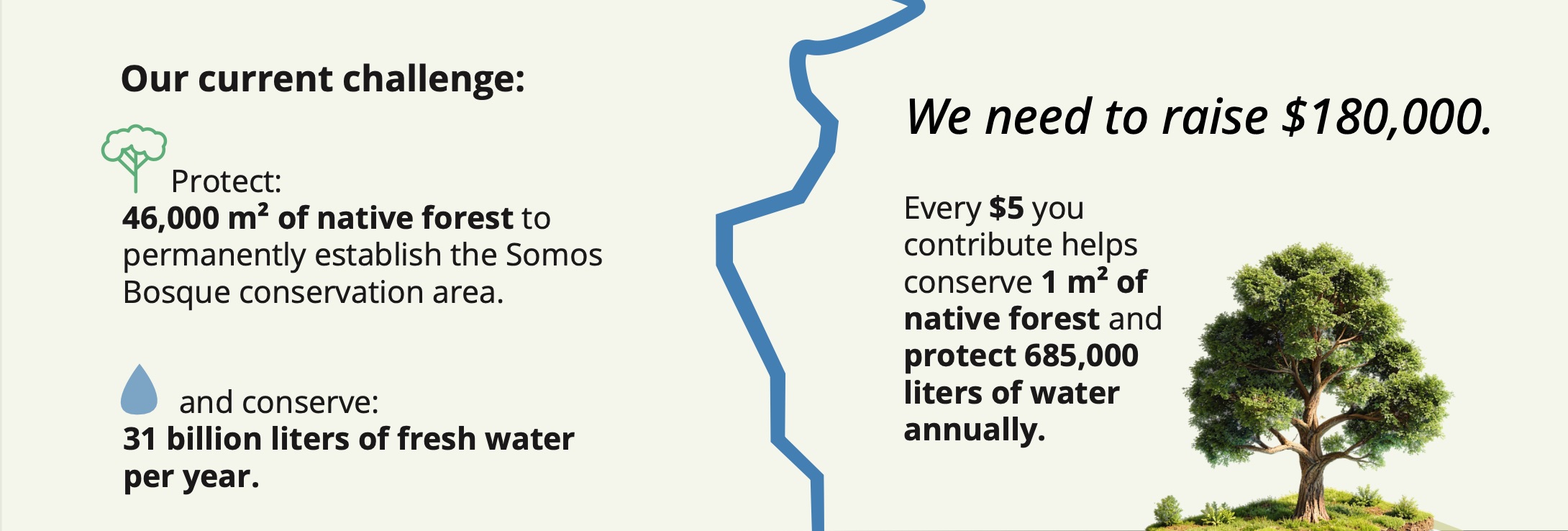
Fundación Cuidemos Paraísos is a non-profit organisation dedicated to the biocultural conservation and regeneration of Native Forests and Water.
Every €5 contribution conserves 1 m² of native forest and protects 685,000 litres of water annually.
🔗 Donate here | 🌐 cuidemosparaisos.cl/en
Amanda J Butler is a Mallorca-based writer exploring the island's evolving culture of wellness, lifestyle and conscious living.
Frequently Asked Questions
What is La Voz del Bosque?
La Voz del Bosque (The Voice of the Forest) is a fundraising and awareness tour created by indigenous advocate Coral Herencia. Travelling across eight European countries in 2026, it combines music, ceremony, storytelling and environmental education to raise funds for the protection of the native forests and waters of Palguín in southern Chile.
Why are forests and water so closely connected?
Forests and water are part of the same living system. Trees and living soils absorb rainfall and feed aquifers and springs. Forests release moisture back into the atmosphere, contributing to clouds and rainfall far beyond their own borders - a process scientists call "flying rivers". Protecting forests means protecting the water cycles that sustain all life on Earth.
How does spending time in nature help wellbeing?
Research consistently shows that time in nature reduces stress hormones, calms the nervous system, improves mood and supports mental health. Practices such as forest bathing grounding and simply walking slowly outdoors all activate these benefits. As Coral Herencia explains, "nature heals because it reconnects us with our original state."
What simple nature connection practices can I do in Mallorca?
Walk by the sea. Sit in the mountains. Listen to the wind in the pine forests. Practise small acts of gratitude for the natural world around you. Coral Herencia's advice is simple: go to the nearest natural space, walk slowly, breathe, observe and listen. Mallorca's landscapes - from the Serra de Tramuntana to its coastal Posidonia meadows - offer extraordinary opportunities for this kind of slow reconnection.
How can I support the protection of the Palguín forests?
Read more about supporting Coral Herencia and protecting the rain forests
When did nature last teach you something you needed to hear? I would love to hear about it below.
Further Inspiration:
Yoga del Mar Spirit Festival Mallorca 2026 · The Best Organic Shops in Mallorca · Finding Calm Within · The Textile Event Redefining Mallorca

As featured in the Mallorca Bulletin
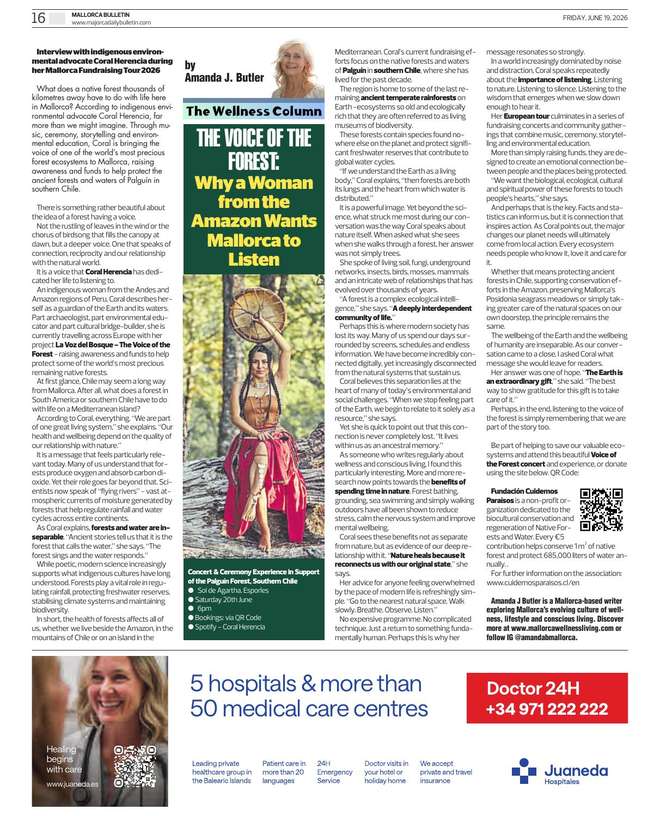
A shorter version of this article first appeared in Amanda’s Wellness Column in the Mallorca Bulletin. Read the original as a PDF →

0 Comments