

- Misdiagnosed: the REMS scan story you are here
- What osteoporosis actually is
- The blood tests most doctors never order
- Best foods for bone health
- Hormones and HRT
- Movement and exercise
- Emerging support and technology
"Above all, be the heroine of your life, not the victim." - Nora Ephron
This osteoporosis diagnosis changed far more than my bone health - it changed the way I think about women's healthcare.
How one unexpected diagnosis sent me on a six-month journey that changed the way I think about women's health.
There are moments in life when everything changes because of a single number.
When One Number Changed Everything
There are moments in life when everything changes because of a single number.
Mine was -3.2.
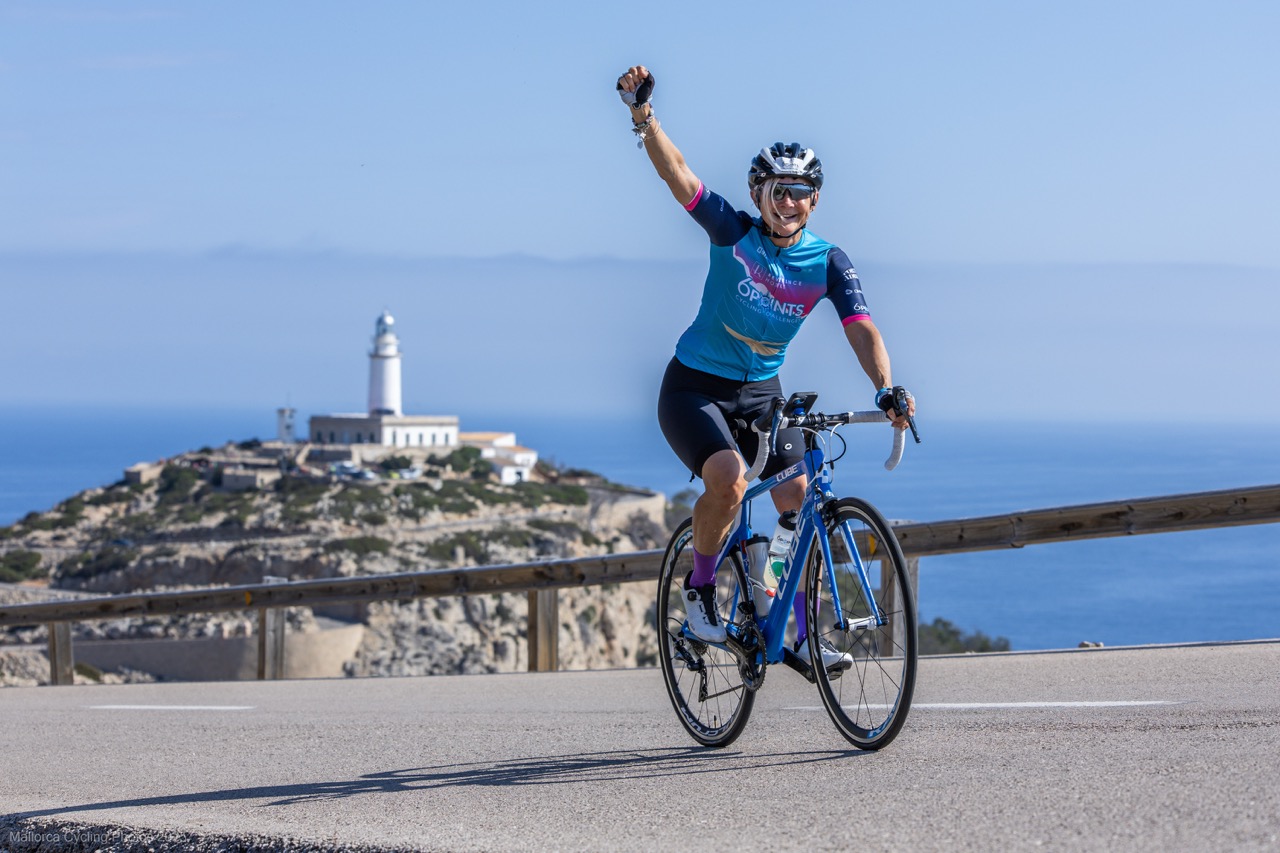
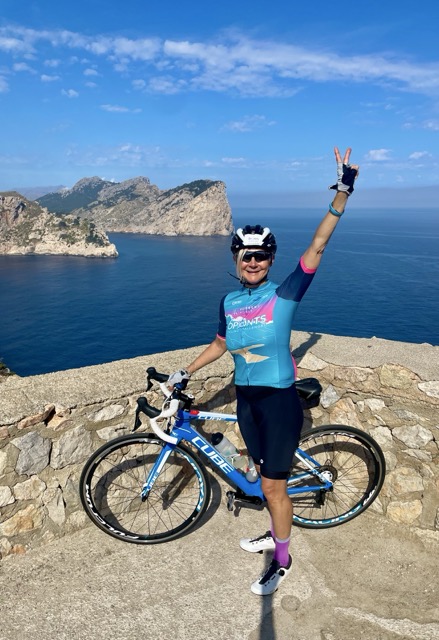
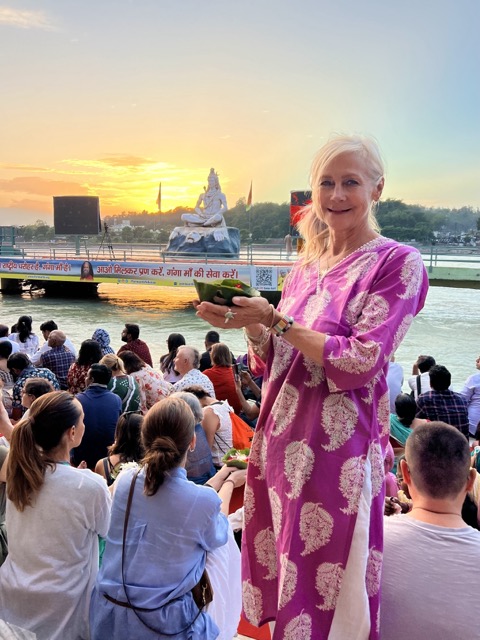
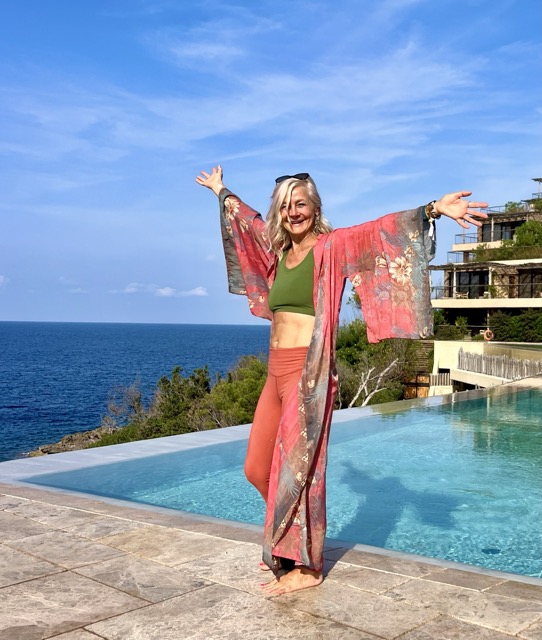
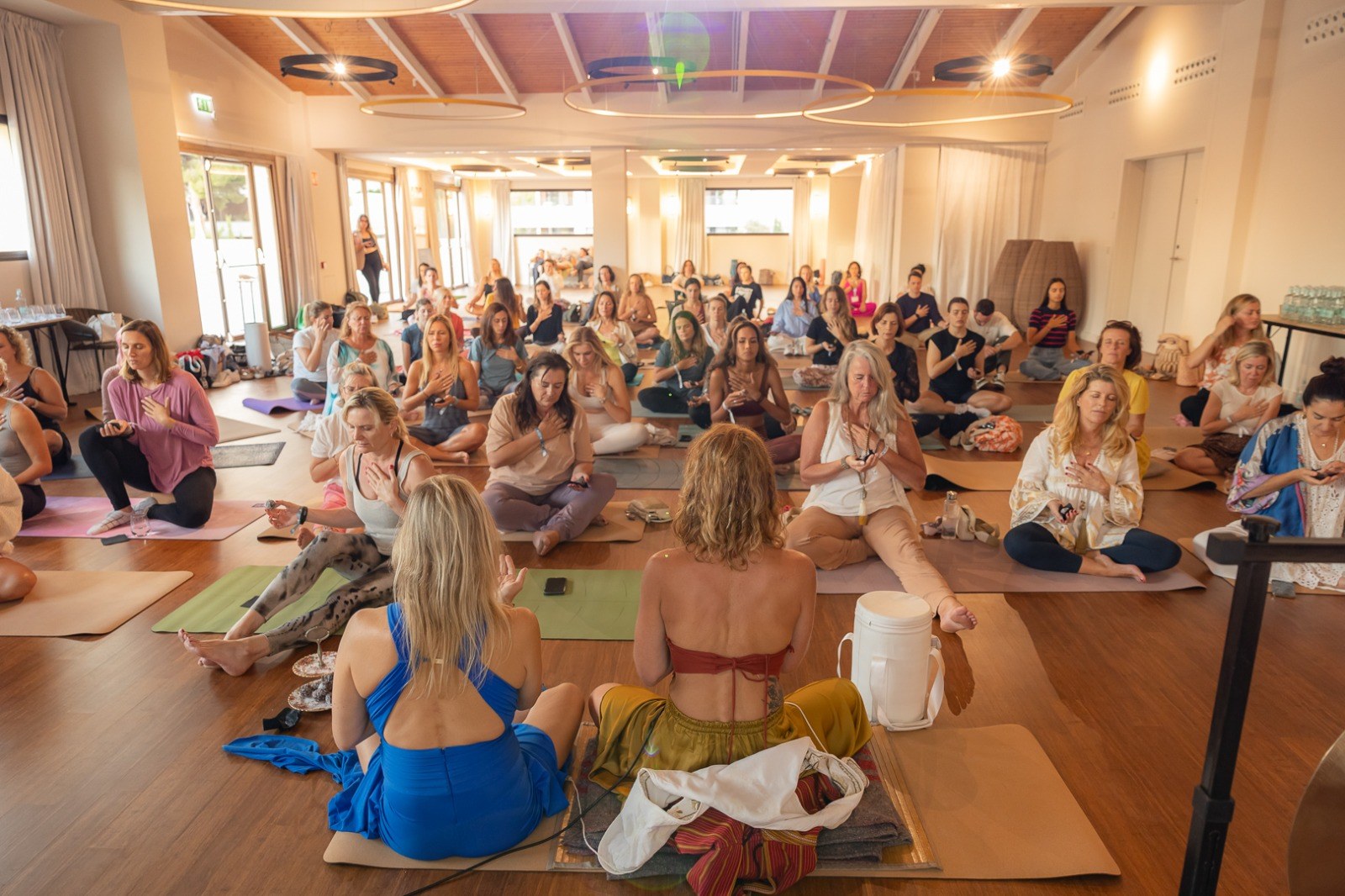
It was November 19, 2025. Until that morning, I had never given much thought to my bones. I was in my late fifties - health conscious, active and happiest on my bicycle climbing Mallorca's mountain roads, hiking in the Tramuntana, swimming in the sea or practising yoga beneath blue Mediterranean skies. I had recently returned from India, where I had spent three intense and uplifting weeks completing my Kundalini Yoga Teacher Training with the internationally renowned teacher Gurmukh. I felt stronger, calmer and more connected to myself than I had in years.
That morning, I wasn't thinking about osteoporosis.
I had booked what I thought would be a routine appointment with a rheumatologist to discuss the swelling and tingling in my fingers - something I was resigned to, since both my mother and grandmother had had arthritis. The DEXA bone density scan had been a precautionary suggestion from my GP. I hadn't thought much of it.
Instead, within the space of a few minutes, everything changed.
“You have severe osteoporosis,” the doctor said. “Your T-score is -3.2.”
I felt as though I had been punched in the chest. My heart began pounding, my throat constricted and a wave of panic swept through me. I felt physically sick.
“Oh my God... what am I going to do? How am I going to deal with this?” my internal voice screamed.
Now I was being told that the framework holding my entire body together was dangerously fragile.
I remember silently telling myself to breathe. “Remember your training - breathe slowly. Deeply. Calm yourself down.” I closed my eyes and counted, trying to steady myself: one, two, three, exhale.
I took a deep breath before asking the only question that came to mind.
“OK... so what does this actually mean? And is there any way we can treat this holistically?”
Nothing prepares you for the moment a diagnosis begins to rewrite the story you tell yourself about your own body.
Nothing prepares you for the moment a diagnosis begins to rewrite the story you tell yourself about your own body. I felt like I’d quietly been assigned to a category I neither recognised nor could comprehend. I found myself wondering whether I should still be cycling. Questioning my yoga practice. Questioning my planned ski trip over Christmas.
“No,” the doctor said. “There is nothing that can be done other than medication. This won’t cure it - it will only slow it down. Your condition is too serious.”
The recommendation was immediate: an injection, long-term medication, and a significant curtailment of any physical activity deemed dangerous. Cycling was strongly discouraged. So was skiing - I had a Christmas trip booked. Everything I loved. The implication was clear: the woman sitting in front of this doctor was fragile, and needed to start behaving accordingly. I suddenly felt old! I went home deeply shaken.
Nothing about this resembled me or my life. The previous year, I had summersaulted over my bicycle when my front tyre jammed to a dead stop in a drain on a descent into Andratx, a village on the west coast of Mallorca. My cycling friends gathered around me in alarm. I caught my breath, checked my body, picked myself off the tarmac and - still shaken and a little more slowly than usual - carried on. Apart from a few bruises, and later being informed I had a small rib fracture where I had hit the handlebars, I was fine.
I was now being told I had been very fortunate.
I suggested I take time to research, reflect and return in the New Year. I went home deeply shaken.
Living as a Diagnosis
Among everything I felt walking out of that office - the shock, the fear, the overwhelming sense of ‘what now?’ - there was one emotion I simply hadn’t seen coming. I couldn’t put my finger on it at the time, but was later surprised to realise it was shame.
As a wellness journalist, Founder of WellnessTraveller.co, writer of this very column and soon-to-launch founder of MallorcaWellnessLiving.com, I suddenly questioned everything I had been building. Would people still trust me? How could I write about healthy ageing if my own bones were supposedly failing?
Looking back, I see how irrational those thoughts were. Osteoporosis affects millions of women, particularly after menopause. Yet because we so rarely talk about it openly, it felt like a personal failure rather than a common health condition.
Perhaps that’s part of the problem. Silence breeds shame. And shame prevents awareness.
From what I understand, bone density changes gradually - not overnight. So I made two decisions. First, I would dig deep, research holistic approaches, seek a second opinion and continue living my life, albeit a little more cautiously - including that ski trip. Second, I would not start medication immediately. Not out of denial, but because I wanted to understand the diagnosis fully, and the implications of any long-term treatment, before committing to it.
“Silence breeds shame. And shame prevents awareness.”
Seeking A Second Opinion
Hoping a more recently qualified specialist might offer a broader perspective, I sought a second opinion from a younger consultant in January. I sat in his office, nervous and hopeful.
The message was largely the same.
With my recently acquired knowledge, I asked whether targeted nutrition, resistance training and supplementation might help. The answer was unequivocal: No. At this severity, medication was my only realistic option and would, at best, slow further bone density loss. When I mentioned reading about women in online communities who had improved T-scores worse than mine through lifestyle and dietary changes, he was dismissive: “Don’t believe everything you read on social media - we need to trust the science.”
One sentence has stayed with me ever since. “You don’t want to end up in a wheelchair.”
I wasn't rejecting medicine. I was searching for more complete answers.
I understood what he was trying to convey - the potentially devastating consequences of osteoporosis and the serious impact fractures can have on quality of life. But hearing those words left me more frightened rather than reassured.
I left his office even more determined to find a different kind of answer - and equally resolved to give myself a year to pursue a more holistic approach, undergo a follow-up scan in a year’s time and then decide with clearer evidence. It was a calculated risk. But it was mine to take.
My life, after all, had always been about wellness. I completely believed in it. I thrived on it. It was time to stand by my own convictions and walk my talk. I fully intended - and desperately hoped - to return in a year’s time and prove him wrong.
What My Osteoporosis Diagnosis Taught Me About Bone Health
Late into the evenings, I immersed myself in scientific papers, expert interviews, podcasts and medical journals. I joined several online osteoporosis support communities, where I found thousands of women sharing remarkably similar stories. Some had chosen medication immediately. Others had taken different paths. Many described combining progressive resistance training, with a targeted, nutrition packed and protein-rich approach, precise supplementation and, in many cases, HRT as part of their bone health journey.
Their experiences weren’t scientific proof. But they were lived experience - and they raised a question I couldn’t ignore: why had I been told so categorically that there was nothing beneficial I could do to reverse this?
I changed my routine significantly. Cycling, I learned, offers little bone benefit - it is non-weight-bearing, despite being excellent for cardiovascular health. I began weight training and resistance work, added skipping for impact and increased my dietary protein: grass-fed beef, sardines, eggs and more fish. I added prunes for Vitamin K, Vitamin D, magnesium glycinate and cod liver oil, and cut back further on sugar and alcohol.
Searching Beyond DEXA
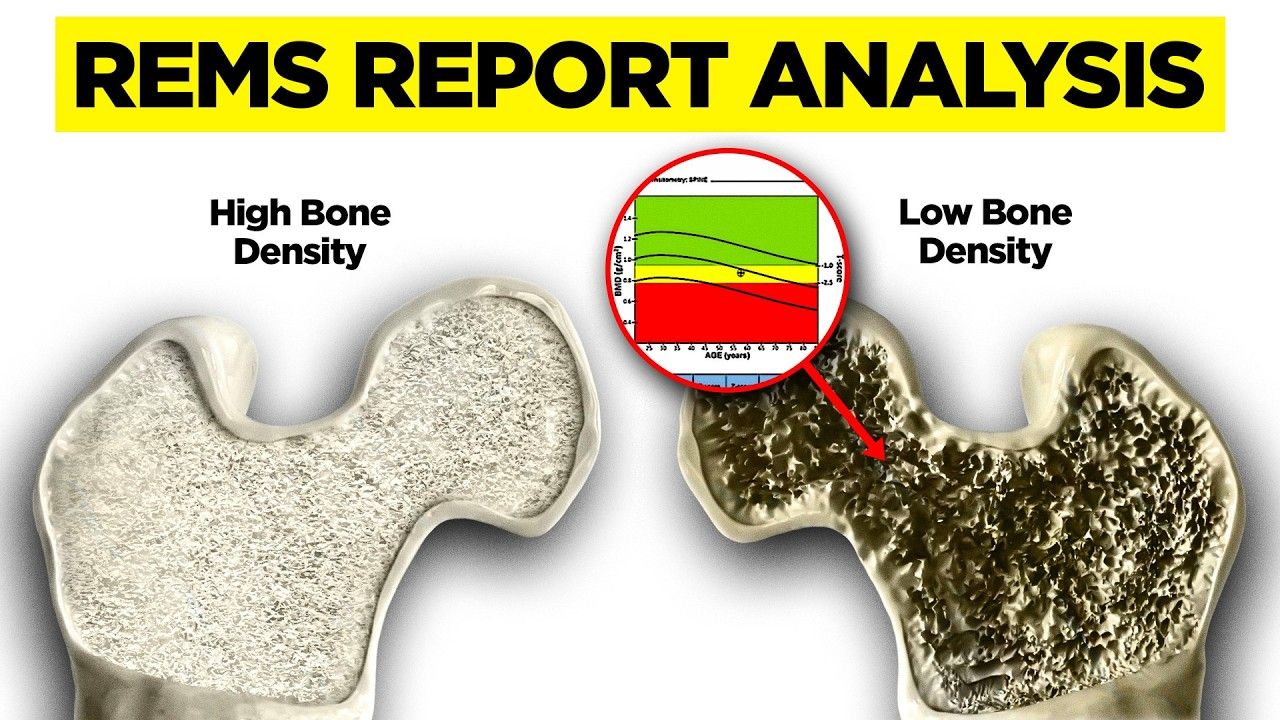
I also began researching an alternative diagnostic technology: the REMS scan (Radiofrequency Echographic Multi Spectrometry). Unlike the traditional DEXA scan - the current gold standard - which uses low-dose X-rays to compare bone density against a reference population that has historically underrepresented older women, smaller frames and non-Caucasian demographics, REMS uses advanced ultrasound to assess both bone density and bone quality. It generates a Fragility Score that accounts for age, sex and weight, is completely radiation-free, painless and includes a fail-safe positioning system to help ensure the scan is correctly performed.
I searched for a REMS scanner in Mallorca. Then across mainland Spain. Both searches drew a blank.
Life, Loss and Perspective
At the end of March, while on holiday in Kenya, I received the phone call nobody ever wants to receive. News that a dear friend had died suddenly. No one saw it coming.
Suddenly, osteoporosis was not the only thing making me think about the fragility of life. Carpe diem was no longer a familiar phrase. It became something I felt in every fibre of my being.
Bristol: A Different Kind of Scan
As I travelled to the UK for the funeral six weeks later, I made one additional appointment - at the Cura Clinic in Bristol, where I had located a REMS scanner conveniently en route.
By then, six months had passed since my original diagnosis. Six months of questions. Six months of research. Six months of living beneath the shadow of a single number.
I sat opposite James Scrimshaw, a REMS-trained osteopath with a warm, unhurried manner. The scan itself was nothing like I had imagined. No X-rays. No intimidating machinery. No discomfort. As the ultrasound probe moved gently across my hips, pelvis and spine, the computer quietly analysed what I couldn’t yet see. The room was calm, almost silent. I remember thinking how extraordinary it was that six months of fear had led me to this moment.
What the REMS Scan Taught Me
Then James looked up. The smile that crossed his face reached his eyes - and in that moment I knew.
“From the moment you walked in, I was quite certain what the results would be - looking at your muscle definition and how clearly you look after yourself. Amanda, I’m really pleased to report you have had a misdiagnosis. You don’t have osteoporosis. You have a T-score of -1.3 in the lumbar spine, which is mildly osteopenic. Your trabecular strength is good, your microarchitecture is strong and your Fragility Score is low.”
For a moment, I couldn’t speak.
I sat there quite dazed at first, watching my own emotion rise as if from outside myself. Then something happened that I hadn’t anticipated - it moved through me like electricity, not a wave but a slow prickling, cell by cell, rising from my feet upwards through my entire body, like a current finally released after months of tension. Tears sprang to my eyes. Not because I had been “right.” But because, for the first time in six months, I felt as though a life sentence had been lifted.
Looking back, I don’t think I was simply feeling relief. I was releasing trauma.
Our strongest bone may not be in our skeleton at all. It may be our courage to advocate for ourselves.
To be honest, I hadn’t expected a full misdiagnosis. I had hoped at best for a slightly better result - not a complete reversal of the picture I had been living with for six months. In those months I had immersed myself in hundreds of personal testimonies and listened to leading doctors share encouraging accounts of women managing osteoporosis holistically - through diet, supplementation, hormone replacement and resistance training. And yet what I felt in that moment was something I can only describe as an exhausted relief - the kind that only comes after you have carried a weight for long enough that you’d forgotten what it felt like to put it down.
This wasn't about proving one scan right and another wrong. It was about seeing the whole woman.
James was careful to explain that DEXA results can be affected by technician positioning, improper scan mode selection, patient movement and certain conditions such as arthritis - all of which can influence readings.¹ He was equally clear that this was not about one scan being right and the other wrong, but about the importance of having more than one tool available. REMS is not necessarily a replacement for DEXA - both have their place. But used together, they offer a significantly more complete picture. Without seeking a second opinion and a second scan, I could have spent at least a year taking medication I didn’t need. Surely it is time for REMS to become a standard complementary assessment in osteoporosis diagnosis, rather than something a patient has to search for themselves.
Why Every Woman Needs to Understand Osteoporosis
What I never expected was that my greatest discovery wouldn’t be the scan itself. It would be the astonishing lack of awareness surrounding osteoporosis - among friends, among women, and even within the healthcare system itself. We spend years talking about heart health, breast health, mental health. Yet one in three women over 50 will develop osteoporosis, and one in two will suffer a osteoporotic fracture in their lifetime, and many know almost nothing about it until they’re handed a diagnosis - often after a fall and a fracture.
That has to change.
One in three women over fifty will develop osteoporosis - yet many know almost nothing about it until they're diagnosed
The critical link between oestrogen decline - which begins as early as the mid-30s - and bone loss is still too rarely discussed at a preventative stage. Prevention conversations often come too late, and too many women are left to piece together this information for themselves.
Osteoporosis Facts - Why Every Woman Needs to Know This
- 1 in 3 women over 50 develop osteoporosis
- Women account for around 80% of all cases
- Lifetime fracture risk approaches 1 in 2
- Hip fractures carry a 20 - 24% first-year mortality rate
- Around 40% lose long-term independence
- Bone loss begins decades before diagnosis
This article is simply the beginning of that conversation. In Part Two, I’ll share what six months of research taught me about nutrition, resistance training, muscle health, lifestyle and the latest thinking in bone health - so that every woman can have more informed conversations with her healthcare team.
This Is Only the Beginning
My hope in sharing my story isn’t to persuade women to reject medical advice. Quite the opposite. It’s to encourage them to ask questions, seek second opinions when something doesn’t feel right, and remember that they are entitled to be active participants in decisions about their own health. Because every woman’s situation is different - and what matters is that the choices we make about our own bodies are genuinely, fully our own.
If there’s one thing this journey taught me, it’s that our strongest bone may not be in our skeleton at all. It may be our courage to advocate for ourselves.
Next week, I turn sixty. Yes - sixty! I step across that threshold with curiosity rather than fear, and an unshakeable belief that asking the right questions is always worth it. Because if six months of research - through the testimonies of hundreds of women and the growing number of doctors taking a more integrated approach to bone health - has taught me anything, it is this: bone health is not a fixed sentence. Meaningful improvement is possible, at all stages and across all T-scores.
Women deserve diagnostics that look beyond a single number. Because no scan, however sophisticated, can ever tell the whole story of the remarkable woman standing in front of it.
Amanda J Butler is a Mallorca-based writer exploring the island’s evolving culture of wellness, lifestyle and conscious living. Follow on Instagram @mallorcawellnessliving & @amandabmallora
Frequently Asked Questions - Osteoporosis
Can osteoporosis be misdiagnosed?
Like all diagnostic tests, DEXA scans have recognised limitations. In some situations, clinicians may recommend additional investigations or a second opinion to build a fuller clinical picture.
What is a REMS scan?
REMS (Radiofrequency Echographic Multi Spectrometry) is a radiation-free ultrasound technology that assesses bone density and bone quality and is increasingly being explored alongside DEXA scanning.
Can lifestyle improve bone health?
Nutrition, progressive resistance training, adequate protein, vitamin D, appropriate medical management where indicated, and other lifestyle factors can all play important roles in supporting bone health. Treatment should always be discussed with a qualified healthcare professional.
Have you ever trusted your body over a diagnosis, or wished you had? Share your experience below, it may help someone else.
Further Inspiration:
Osteoporosis Blood Tests · What Is Osteoporosis? · Feed Your Bones

Disclaimer: Amanda is a wellness writer, not a medical professional. This article is for general information only and is not medical advice. Where research is referenced, the sources are linked for you to explore. Always talk to a qualified healthcare professional about your own situation before making any changes, as individual needs vary.
Thanks for sharing such important information. Really interesting article and food for thought.
You’re welcome Melanie – thank you for your interest
Thank you so much for sharing this.
My mother had a Dexa scan last year and was diagnosed with osteoporosis. It was also a shock as things have happened to her in the past where she could have broken many bones but never did.
Thanks to your article we are going to look into her having an REMS scan.
Thank you 🙏🏻
That’s great – glad to be of help. There are plenty to be found in the UK
Thanks for sharing this Amanda. It is so informative and makes something scary and complicated accessible. Well done for hanging onto your gut feeling that you had been misdiagnosed and showing others there is always another way!