

Why being active is not always enough to build stronger bones, and what strength training for osteopenia and osteoporosis really involves, with Mallorca-based trainer Kate Sotelo.
When I was first diagnosed with osteoporosis following a DXA scan, I did what many people do: I became afraid of doing what I loved. Could I still cycle? Could I ski? Was jumping dangerous? Even yoga suddenly seemed to contain movements I had been advised to avoid.
Six months later, a REMS scan, an ultrasound-based assessment of bone density and fragility, placed my results within the osteopenic rather than osteoporotic range. It was a relief, but also deeply confusing. The two technologies assess bone differently and can produce discordant classifications, which is why results need to be interpreted alongside fracture history, medical risk factors and clinical judgement rather than treated as the whole story.
That distinction also affected what exercise was appropriate for me. After an individual assessment, I was able to proceed with challenging resistance training. Someone with previous vertebral fractures, active pain, poor balance or a substantially different clinical profile might need a more cautious starting point.
Whether your diagnosis is osteopenia or osteoporosis, or even if your bones are perfectly strong, specialist guidance matters. I booked a private session with Mallorca-based personal trainer and Pilates instructor Kate Sotelo, whose work increasingly focuses on women's bone health.
I arrived feeling quite confident, I cycle, walk, hike and practise yoga, so surely I was already doing many of the right things? I was. But being active and specifically training your bones are not necessarily the same thing.
Why Bones Need a Reason to Adapt
Walking, cycling, swimming, yoga and Pilates all deserve a place in a healthy life. They support cardiovascular fitness, mobility, balance, flexibility, posture, mental wellbeing and body awareness. What they do not always provide is enough progressive resistance or sufficiently novel impact to stimulate meaningful adaptation in bone.
“An effective bone-health programme should include progressive strength training, appropriate impact, balance, posture and mobility work. Each plays a different role.”Kate Sotelo
Bone is living tissue. It is continually remodelled by cells that remove older bone and cells that form new bone. When a muscle contracts against resistance, it pulls on its bony attachment. External load also places strain through the skeleton. When the signal is sufficiently challenging, appropriately directed and followed by adequate recovery and nutrition, the body has a reason to reinforce the structure.
The response is site-specific. Loading the legs does not automatically strengthen the wrists, and an exercise that challenges the hip may not create the same stimulus at the spine. That is why a rounded programme needs several movement patterns rather than one favourite exercise.
Why Resistance Training Is Your Best Defence Against Osteopenia and Osteoporosis
Resistance training supports bone directly through mechanical loading and indirectly through stronger muscles, better balance and improved physical function. These indirect effects matter because bone density is only one part of fracture risk. The ability to catch a stumble, control a landing, rise from the floor and remain independent can be just as consequential.
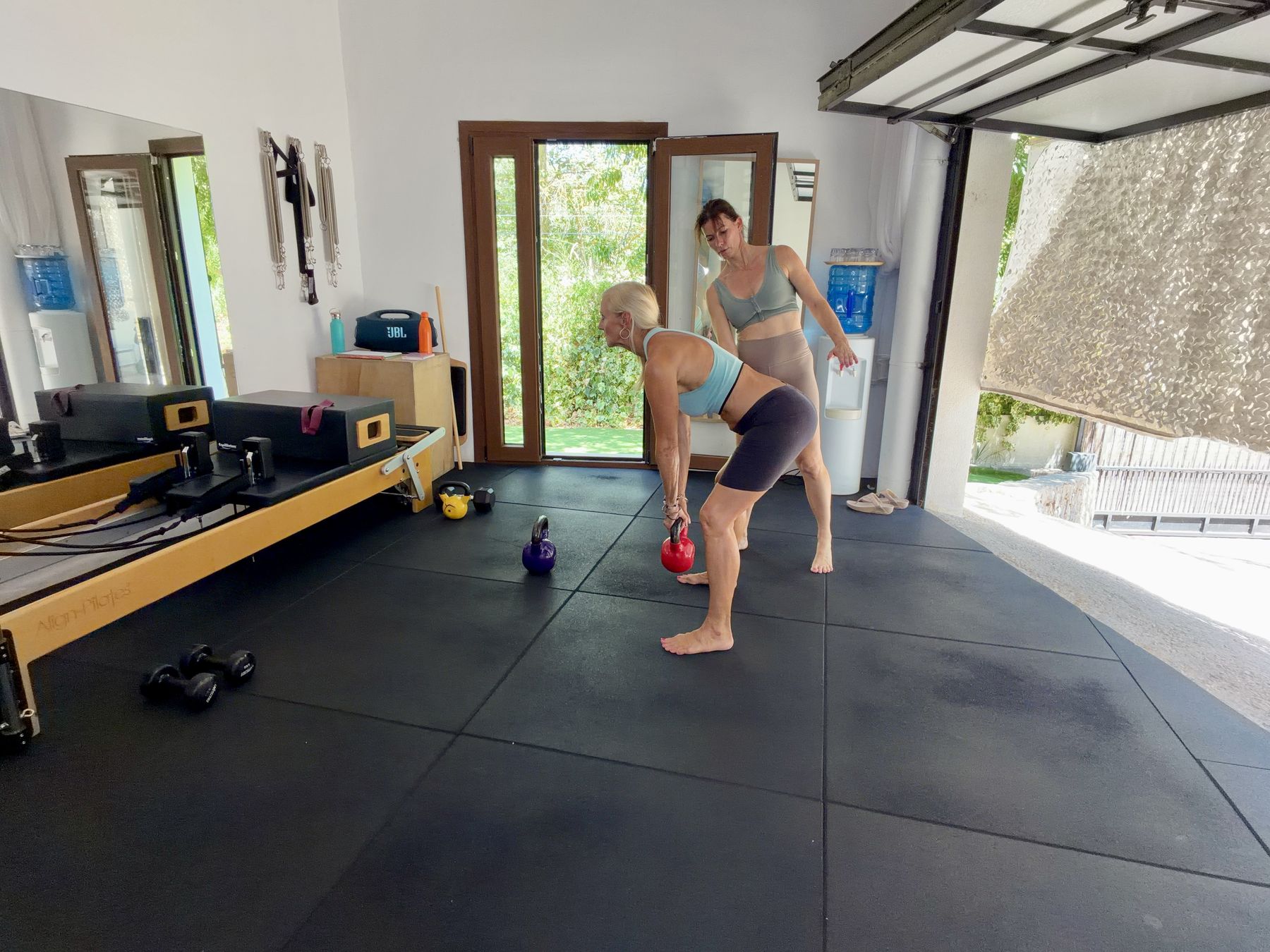
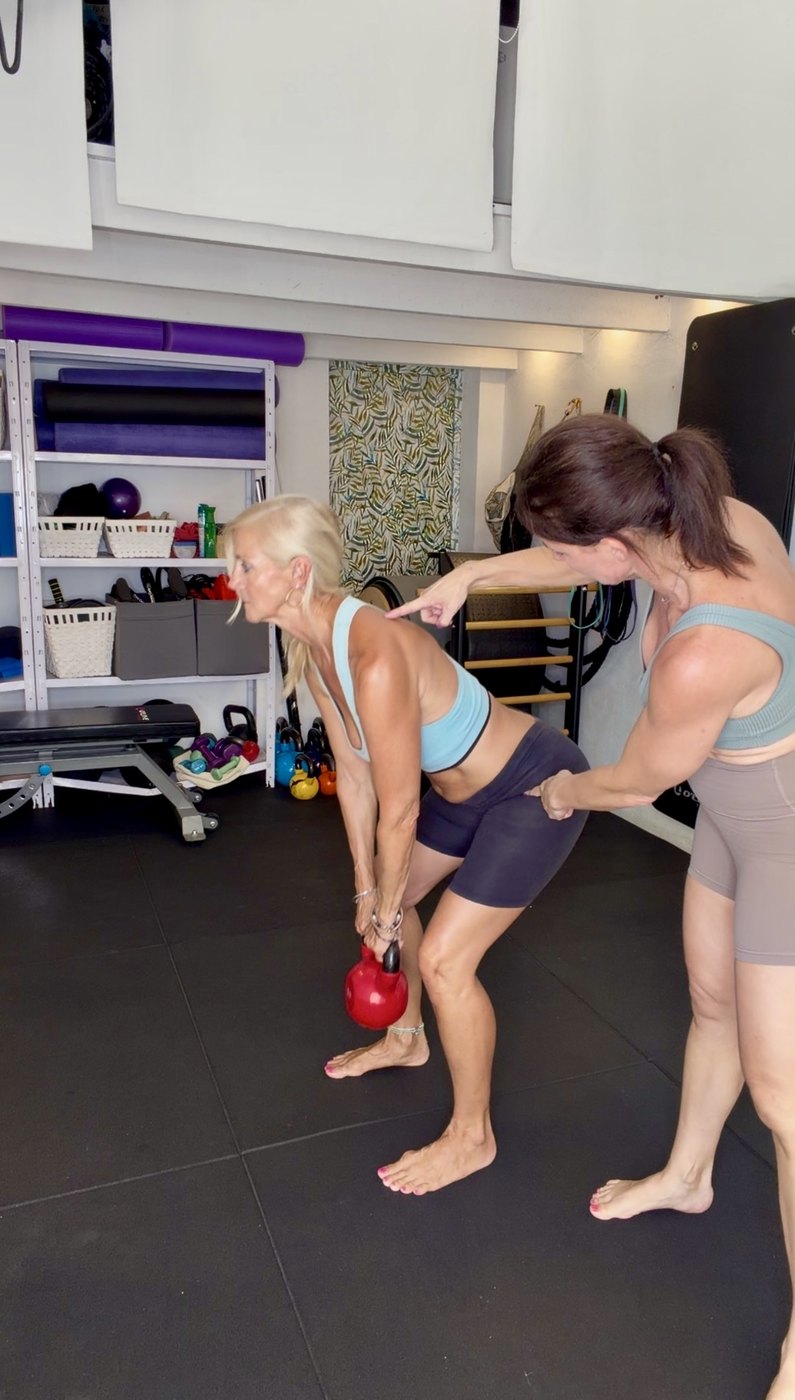
During my assessment, Kate considered my injury history, activity level and training experience before looking at posture, mobility, balance, coordination, strength and movement technique. She found that I already had good body awareness and a solid fitness base. My programme could therefore include squats, deadlifts, loaded carries, pushing and pulling movements, together with exercises that stabilise the trunk and resist unwanted rotation.
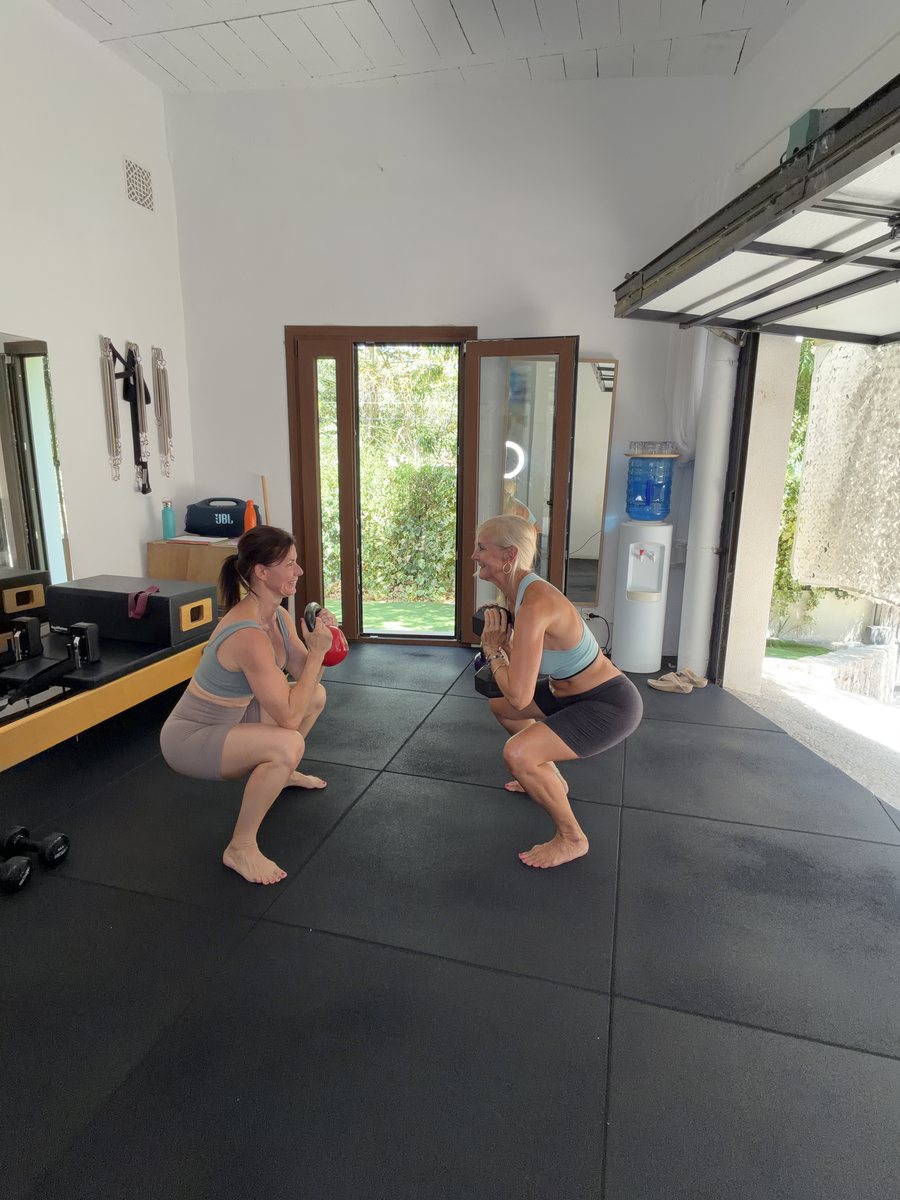
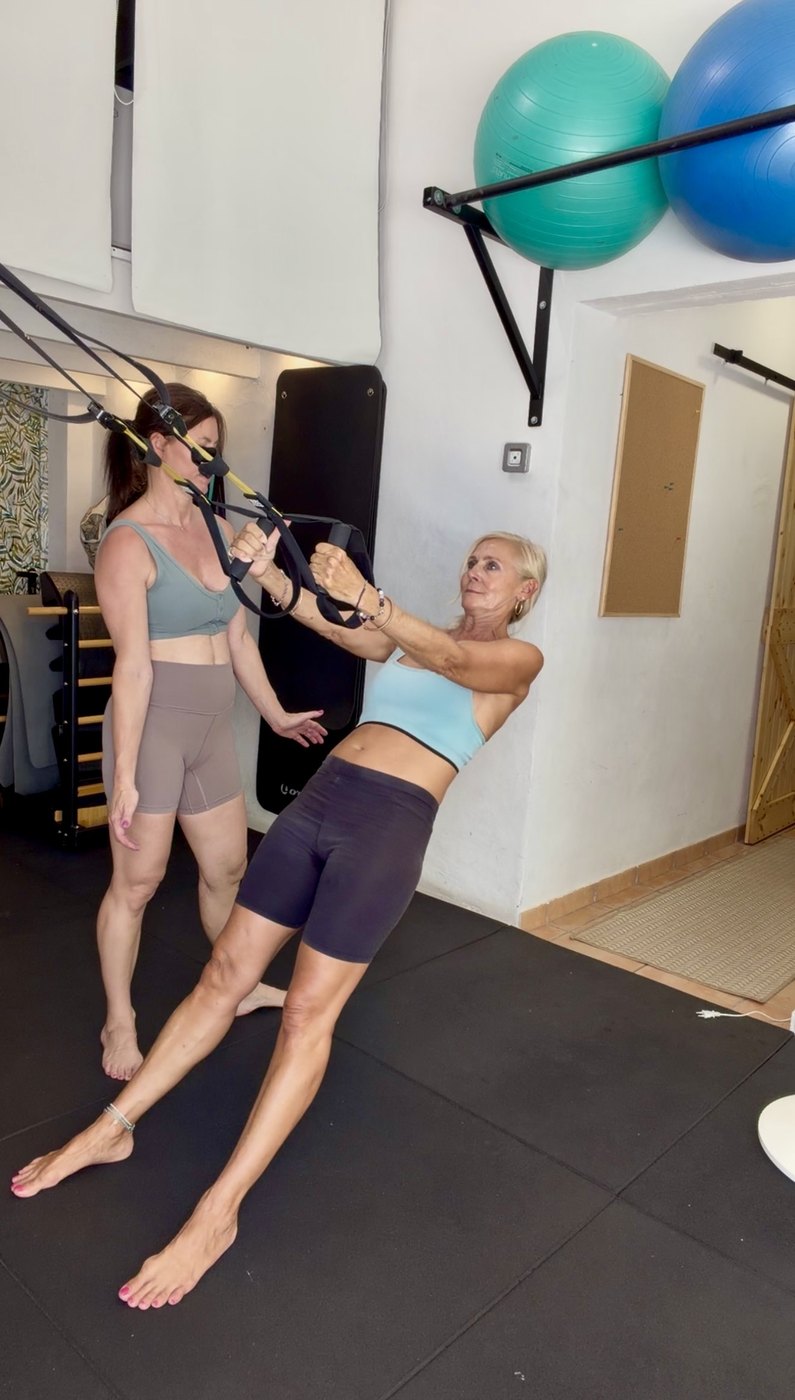
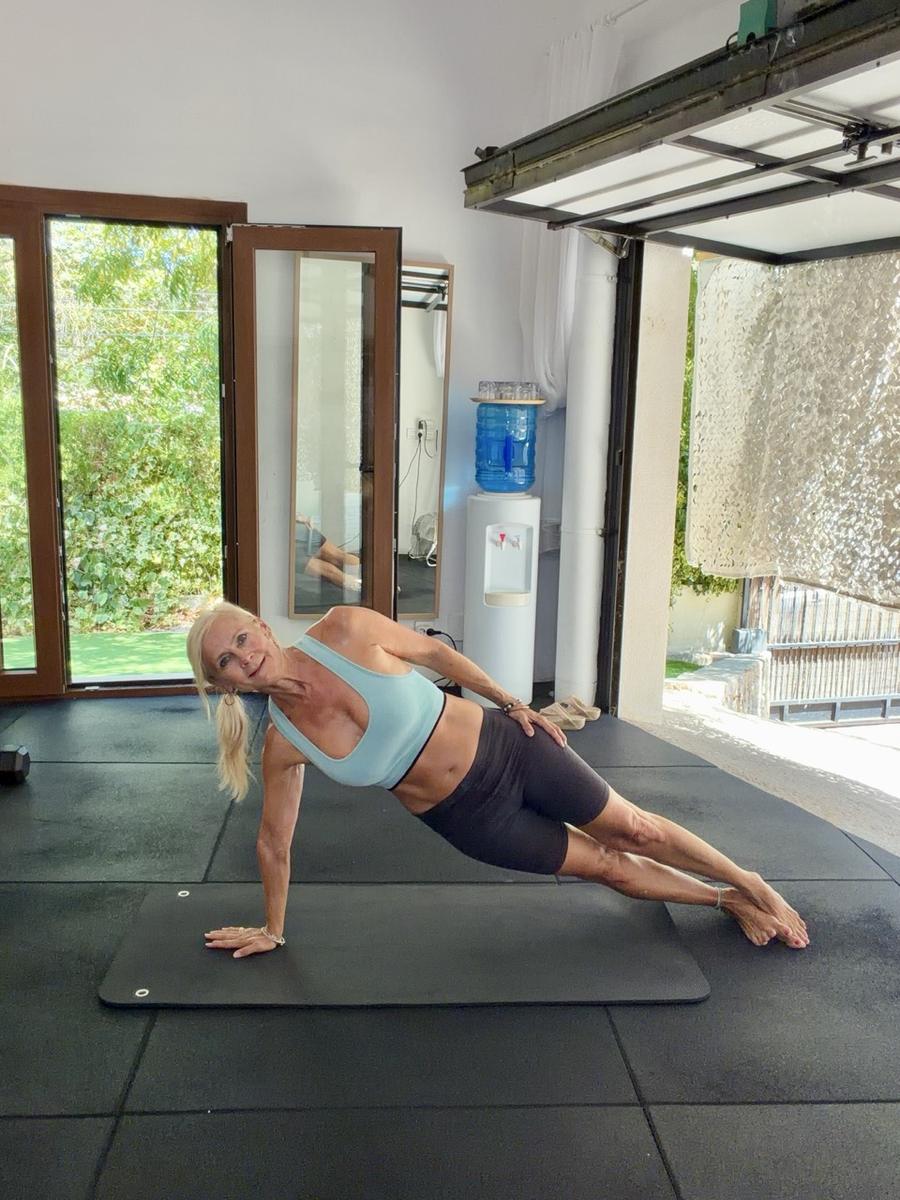
These are compound movements, meaning they recruit several joints and muscle groups at once. They also resemble real life: standing up, lifting shopping, carrying luggage, pushing something away or picking an object up from the floor.
How Heavy Should Women Lift?
Many women have spent years using very light weights, partly through fear of injury and partly through the persistent myth that challenging weights will make them bulky. Light weights can be an intelligent starting point, but they should not remain the permanent destination when the goal is to increase strength and provide an osteogenic stimulus.
Kate uses a practical range of approximately eight repetitions with good technique, where the final repetitions feel genuinely difficult. Exercise physiologist Dr Stacy Sims often favours heavier loads and lower repetition ranges, particularly from perimenopause onwards. These are not necessarily conflicting instructions. Different programmes use different loading schemes, but the shared principle is progressive overload: the work must become more demanding as the body adapts.
Progressive overload can mean increasing the weight, adding repetitions or sets, improving range and control, or advancing to a more demanding variation. Simply repeating the same easy routine indefinitely will not keep producing the same adaptation.
For a novice, effort should never come at the expense of form. The useful weight is not the heaviest object you can move once. It is the load you can control through the intended movement while maintaining alignment, breathing and confidence.
Do Women Need a Different Programme From Men?
Sims has spent much of her career arguing that women are not simply smaller men. Women generally have a greater proportion of fatigue-resistant muscle characteristics and, in some circumstances, recover more quickly between repeated contractions. She therefore suggests that some women may need slightly less rest between sets than men to create a comparable training stimulus.
This is an optimisation detail, not a universal rule. Sex differences overlap considerably, and age, training experience, sleep, medication, health and the heaviness of the set all affect recovery. A woman lifting near her maximum may still need several minutes before repeating the exercise well. The practical test is whether the next set can be completed with the same technique and intended effort.
“Women are not small men.”Dr Stacy Sims
Technique First, Fear Second
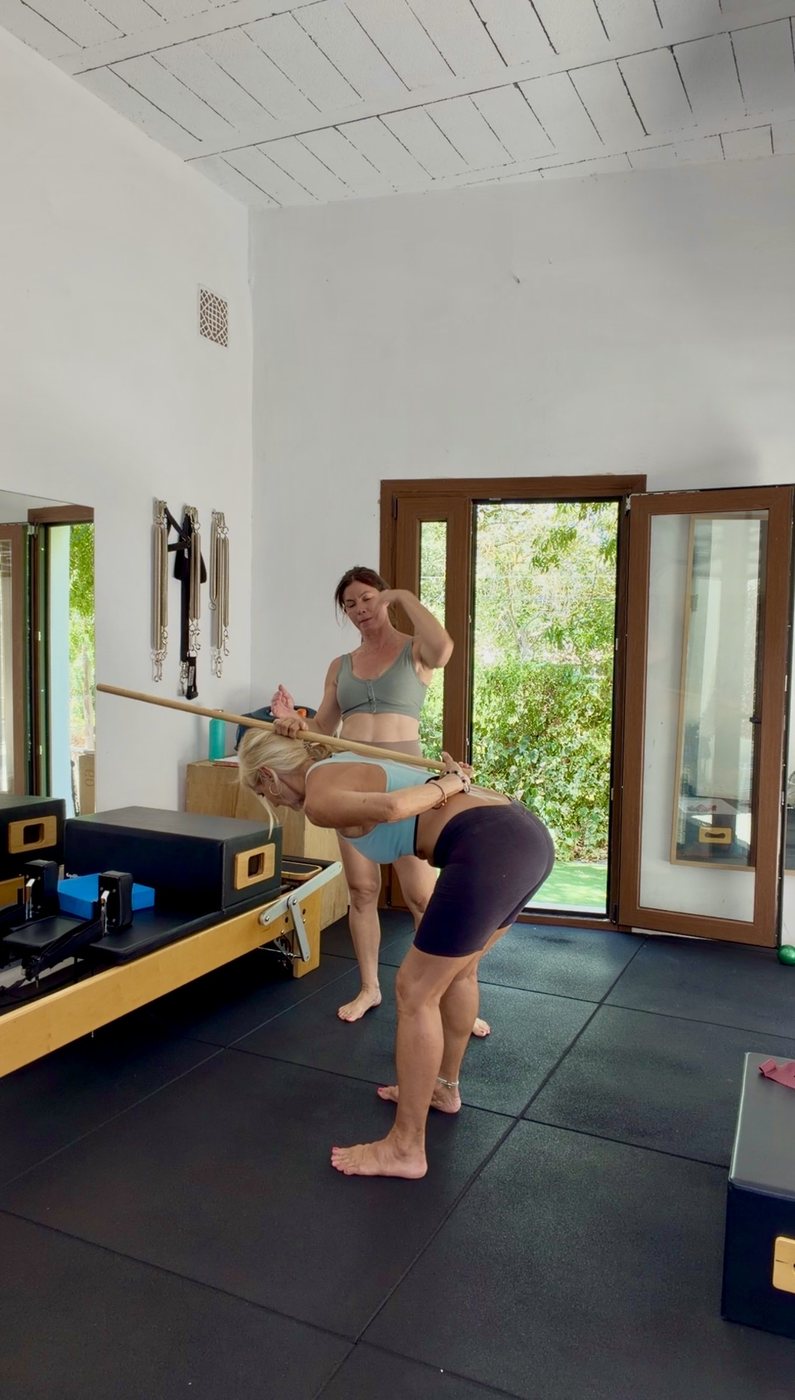
Kate first had me practise a hip hinge with a broom handle against my back. The simple drill exposed the difference between bending through the hips with a controlled neutral spine and rounding forwards through the back.
This distinction matters. A well-taught deadlift can load the hips, legs, back muscles and skeleton effectively. A poorly controlled lift that combines a heavy load with spinal rounding may create a very different risk, particularly for someone with vertebral osteoporosis.
For people at higher fracture risk, loaded or repeated end-range spinal flexion, forceful twisting and movements that combine flexion with rotation need to be modified. That does not mean living rigidly or never bending again. It means learning safer strategies, including hip hinging, controlled rotation and appropriate load selection.
Fear can be damaging too. When people stop moving because they feel fragile, they may lose strength, balance and confidence, which can increase fall risk. The aim is not to remove challenge. It is to dose challenge intelligently.
“Osteoporosis or osteopenia should not make us afraid of our bodies. We need to be taught how to load them more intelligently.”Amanda J Butler
Should Every Woman With Low Bone Density Jump?
Impact creates rapid ground-reaction forces that bones can detect. Depending on the person, useful impact may include brisk walking, stair climbing, heel drops, jogging, hopping, skipping or jumping. However, the instruction to 'just start jumping' is not a responsible universal prescription.
Orthopaedic surgeon and bone-health physician Dr Doug Lucas has highlighted an important gap between the popularity of jumping online and the mixed evidence in postmenopausal women. Jump training has shown clearer gains in younger adults. In older and postmenopausal groups, some studies suggest that it may help maintain bone rather than produce large increases in bone mineral density. Protocols also vary greatly in jump height, direction, volume and landing style.
The landing is crucial. A soft landing with deep knee flexion creates a different skeletal force from a controlled drop landing designed to deliver impact. Yet a woman who lacks strength or landing control may hit the ground harder without producing a safer or more useful stimulus.
Before introducing impact, Kate considers bone density, fracture history, joint health, pain, strength, balance and coordination. Useful readiness checks include walking and climbing stairs comfortably, performing a controlled sit-to-stand, rising onto the toes, balancing on one leg and managing a small step-down without pain or instability.
Progression might begin with brisk walking, stairs, deliberate stomping or controlled heel drops before advancing to small jumps, hops or skipping. The objective is not impact at any cost. It is the right impact for the right body at the right time.
What the LIFTMOR Trial Really Showed
The Australian LIFTMOR randomised controlled trial is frequently cited because supervised high-intensity resistance and impact training improved lumbar-spine and femoral-neck bone mineral density, strength and function in postmenopausal women with low bone mass. The programme included heavy compound lifts and a controlled impact movement.
It was not a generic jumping challenge. Participants were carefully screened, taught and supervised. The trial supports the value of high-intensity resistance and impact training when appropriately delivered. It does not mean that every person with osteoporosis should copy the exercises without assessment.
What Astronauts Can Teach Us About Bone Strength
An unexpected test case for the importance of strength training comes from space. In microgravity, astronauts are deprived of the everyday mechanical forces that gravity places upon the skeleton. As a result, they can lose bone and muscle at an alarming rate, particularly from weight-bearing areas such as the hips and legs.
NASA spent years investigating how to counter this deterioration. Astronauts exercised on treadmills and stationary bicycles, but cardiovascular exercise alone was unable to provide enough skeletal stimulus. Ensuring adequate calcium (through diet rather than supplementation) and vitamin D was important for nutritional sufficiency, but nutrients could not replace the missing mechanical load. Even NASA's early resistance equipment produced limited protection because the forces it generated were not sufficiently high.
The breakthrough came with the Advanced Resistive Exercise Device, introduced to the International Space Station in 2008. Capable of producing far greater resistance, it allowed astronauts to perform movements comparable to heavily loaded squats, deadlifts and presses. Research subsequently found that astronauts using this higher-load equipment, alongside adequate energy, protein and vitamin D, maintained bone considerably better than crews using the earlier, lower-load system. An extreme situation, but it reveals a principle that applies on Earth: bone needs more than movement, it needs meaningful load.
A Complete Strength Training Programme for Bone Health
Strength training is central, but a complete programme addresses several interconnected capacities.
- Progressive resistance: Loads muscle and bone while improving strength and everyday function.
- Appropriate impact: Provides rapid mechanical signals when joints, balance and fracture risk allow.
- Balance and reaction: Help prevent the fall that often precedes a fracture.
- Posture and spinal strength: Support alignment, confidence and safer lifting.
- Mobility: Allows daily tasks and exercises to be performed with useful range and control.
- Cardiovascular movement: Supports the heart, brain, metabolism and stamina, even when it is not strongly osteogenic.
Train the Hips, Spine and Wrists
Because bone adaptation is site-specific, exercise should address common fracture sites. Squats, lunges, step-ups, deadlifts and other hip hinges challenge the legs and hips. Rows, loaded carries and carefully selected back-strengthening work support the spine and posture. Grip training, carrying weights and progressively introduced wall, incline or floor push-ups can load the wrists and forearms.
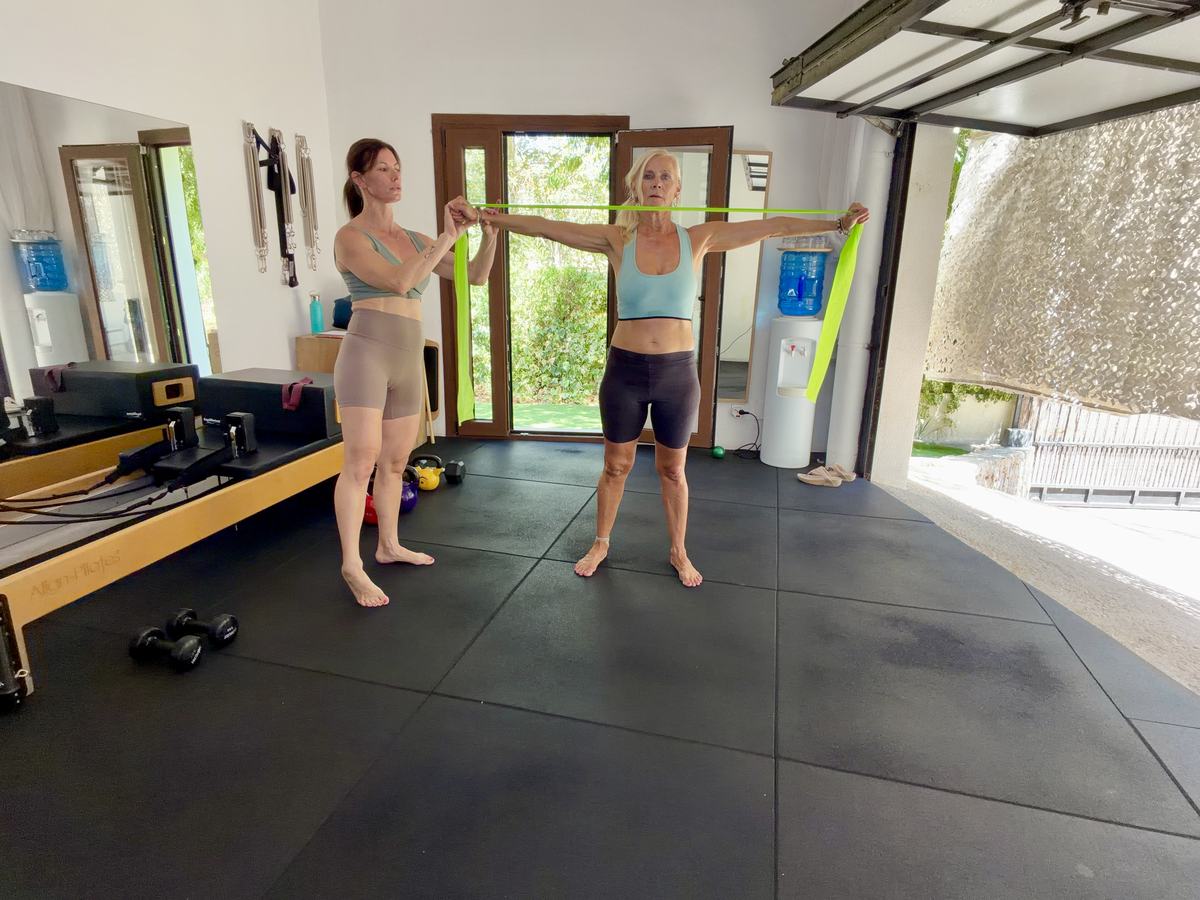
Walking remains valuable, especially for people starting from a low activity level, but it should not be asked to do every job. Cycling and swimming offer excellent cardiovascular training but little impact. Yoga and Pilates can improve balance, posture, control and mobility, yet most classes do not provide the progressive external resistance required for a full bone-strengthening programme. These activities complement resistance training rather than compete with it.
Warm Up for the Work Ahead
Kate recommends five to ten minutes of dynamic mobility and movement preparation. The warm-up should rehearse the session rather than simply make you warm. Bodyweight or banded squats can prepare for loaded squats, while light hinge practice can prepare for deadlifts. A few minutes of easy cardio can raise body temperature, but it should complement movement-specific preparation rather than replace it.
How Often Should You Train?
Kate recommends resistance training two or three times per week. A focused 20-minute programme can provide a useful foundation, although a complete session with warm-up and several exercises may take longer. Consistency, appropriate intensity and progression matter more than an impressive but unsustainable schedule.
Progress should not be judged solely by the next scan. Heavier or more controlled lifts, improved balance, easier stair climbing, better posture, greater confidence, carrying shopping and rising from the floor are meaningful outcomes. They can improve long before a measurable change appears on DXA or REMS.
Most fragility fractures actually happen in women whose scans show osteopenia, not osteoporosis, which is why strength and balance matter as much as the number. And for the record, a fragility fracture, meaning a break from a simple fall from standing height or less, is in itself enough for a diagnosis of osteoporosis, particularly at the hip or spine, whatever the T-score says.
What Should You Wear for Strength and Balance Training?
Footwear affects stability and the quality of feedback coming from the floor. Kate generally prefers a flat, secure shoe with good grip and a wide toe box for resistance and balance training. Excessively soft or elevated soles can create an unstable base when lifting. Running shoes are also not appropriate.
Barefoot or minimalist-style shoes can increase sensory feedback and allow the foot to work more naturally, but they are not suitable for everyone. They should be introduced gradually and may be inappropriate for people with foot pain, neuropathy, poor balance or specific podiatric needs. The best shoe is the one that allows you to feel stable, maintain alignment and perform the exercise safely.
Fuel the Adaptation
Exercise supplies the stimulus, but the body needs energy and nutrients to respond. Chronic under-fuelling can impair muscle repair, disturb hormonal and metabolic function and undermine bone health. This is particularly relevant to active women who combine demanding exercise with weight-loss dieting, prolonged fasting or insufficient protein.
Kate generally advises against routinely performing demanding strength sessions fasted. A light snack 30 to 90 minutes beforehand containing carbohydrate and approximately 15 to 25 grams of protein can support energy, performance and recovery. It might be yoghurt with fruit, a protein drink and banana, or another easily digested combination that suits the individual.
Dr Sims places particular emphasis on eating early and distributing protein through the day. Her position that all women should avoid fasted training is stronger than the current evidence can support universally, but her central warning is well founded: repeated hard training without sufficient energy availability is not a bone-health strategy.
Protein provides the amino acids needed for muscle protein synthesis, while bone health depends on an adequate, varied and colourful whole-food diet providing calcium, phosphorus, magnesium, potassium and vitamins D, C, K and A. A health-focused lifestyle, minimising ultra-processed foods and alcohol, avoiding smoking and consuming sufficient liquid, helps ensure that the work you put into training delivers the greatest possible reward. Supplements are best used to address identified gaps, rather than distracting from the foundations of nutritious food, adequate fuelling and progressive training.
Where Creatine May Fit
Creatine has moved beyond its body-building reputation. It helps supply rapid energy to muscle and can support gains in strength and lean mass when combined with resistance training. Dr Sims commonly recommends a modest daily dose for women, particularly in midlife and beyond.
The case for muscle and performance is stronger than the case for directly increasing bone density. Current scientific evidence does not present creatine as an osteoporosis treatment, but many more holistically oriented practitioners are reporting positive benefits. Its value may be indirect: if it helps a woman train more effectively, preserve muscle and improve function, that stronger muscle-bone partnership may support skeletal health. Anyone with kidney disease, complex medication needs or another relevant medical condition should discuss supplementation with a clinician.
Why Muscle Matters Into Our Seventies
The importance of resistance training extends far beyond the skeleton. Ageing muscle becomes less responsive to the same stimulus, while chronic low-grade inflammation can interfere with muscle protein synthesis and accelerate breakdown. Preserving muscle helps maintain glucose control, metabolic health, mobility and resilience during illness.
An emerging part of this story involves cellular senescence. Damaged or stressed cells can stop dividing without disappearing. Some release inflammatory signals known collectively as the senescence-associated secretory phenotype, or SASP. Senescent cells have useful short-term roles in processes such as wound healing, but their accumulation with age is being investigated as a contributor to chronic inflammation, impaired tissue repair and age-related bone loss.
It is too early to claim that lifting weights simply removes these so-called 'zombie cells' from the human body. But what resistance training clearly does is preserve muscle, improve insulin sensitivity and mitochondrial function, release muscle-derived signalling molecules and reduce aspects of chronic inflammation. In doing so, it creates a more metabolically healthy and regenerative environment.
Building strength in our fifties and sixties is therefore not only about how we look today. It helps determine how capably we can move through our seventies and beyond, for a strong and healthful longevity.
A Practical Weekly Strength Training Framework for Bone Health
This is a framework rather than an individual prescription. Anyone with osteoporosis, a previous fragility fracture, significant pain or uncertainty about safe loading should seek appropriately qualified guidance.
| Weekly element | Purpose |
|---|---|
| Two to three resistance sessions | Include a squat or sit-to-stand, hip hinge, push, pull, loaded carry and trunk-stability exercise. Progress the load gradually. |
| Regular weight-bearing movement | Walk, climb stairs and remain generally active across the week. |
| Appropriate impact | Use the level established by your fracture risk, joint health, strength and landing control. |
| Balance and reaction practice | Include single-leg balance, multi-directional stepping and safe corrective-step drills. |
| Mobility and posture | Maintain the movement range needed for daily life while avoiding high-risk loaded positions where clinically indicated. |
| Recovery and nourishment | Allow recovery between demanding sessions and eat enough protein, carbohydrate and micronutrient-rich food, and don't forget to keep hydrated. |
Three Ways to Begin Today
For someone who feels too old, weak or frightened to start, Kate suggests three simple actions:
- Practise controlled sit-to-stands from a chair.
- Try push-ups against a wall or kitchen counter.
- Seek a trainer or physiotherapist who understands osteoporosis and can teach lifting technique safely.
“It is never too late to begin. Stop putting it off and simply start.”Kate Sotelo
Strong bones require more than calcium, a daily walk or a number on a scan. They need nourishment, muscle, balance, intelligent challenge and our willingness to become stronger.
About Kate Sotelo
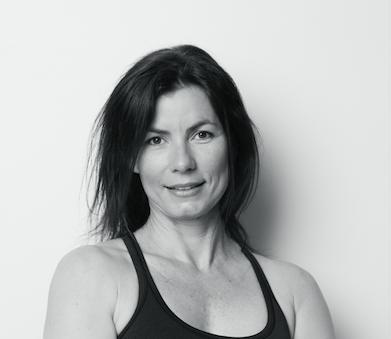
Kate Sotelo is a Mallorca-based personal trainer and Pilates instructor with a growing focus on women's bone health. She works from her studio in Puigpunyent, online and through home visits. Contact her on Instagram: @kbspilatesfit.
Key Takeaways
- Being active is not the same as training your bones. Walking, cycling, yoga and Pilates support health, but bone needs progressive resistance and, where appropriate, impact.
- Bone adapts where it is loaded, so train the hips, spine and wrists with squats, hinges, pushes, pulls and carries.
- Lift weights that make the last few repetitions genuinely hard, then progress gradually. Technique always comes before load.
- Jumping is not a universal prescription. Build strength, balance and landing control first, and get assessed.
- Fuel the work: avoid hard sessions on an empty tank, and eat enough protein and whole foods to recover.
- Two or three focused resistance sessions a week is a strong foundation, and it is never too late to begin.
Are you aware that 1 in 2 women over 50 are osteopenic, and 1 in 3 women will suffer an osteoporotic fracture? Have you already started resistance training, or are you planning to start? If you’ve already started, we’d love to hear if you’ve started to feel the difference, and how long that took? Please share in the comments below.
Read & add your comment ↓Further Inspiration:
Why I rethought my training · What HRT does for your bones · Best foods for bone health

As featured in the Mallorca Bulletin
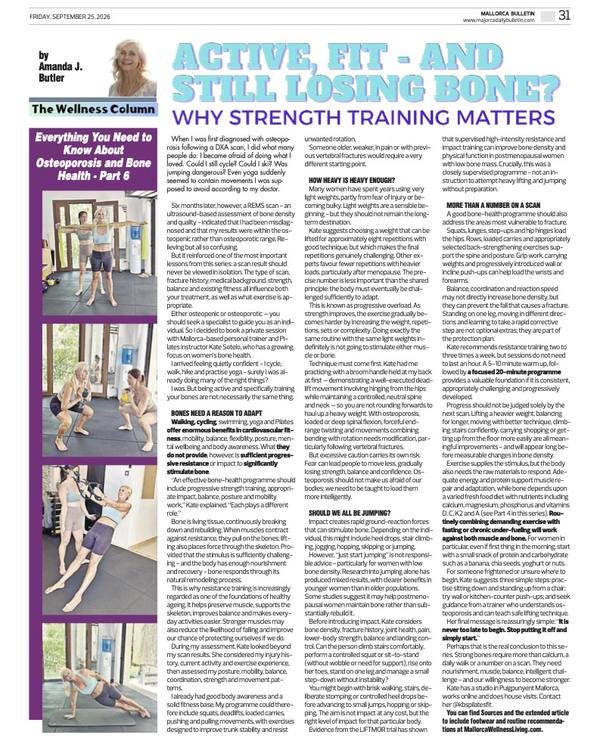
A shorter version of this article first appeared in Amanda’s Wellness Column in the Mallorca Bulletin. Read the original as a PDF →
Sources and Further Reading
I have leaned on peer-reviewed trials and consensus statements, menopause and ageing bodies, and the named practitioners whose work shaped this piece.
- High-intensity resistance and impact training improves bone mineral density and physical function in postmenopausal women with osteopenia and osteoporosis: the LIFTMOR randomised controlled trial. Watson et al., Journal of Bone and Mineral Research, 2018.
- Strong, steady and straight: UK consensus statement on physical activity and exercise for osteoporosis. Brooke-Wavell et al., British Journal of Sports Medicine, 2022.
- Too Fit To Fracture: exercise recommendations for individuals with osteoporosis or osteoporotic vertebral fracture. Giangregorio et al., Osteoporosis International, 2014.
- Bone mineral density thresholds for pharmacological intervention to prevent fractures (NORA study). Siris et al., Archives of Internal Medicine, 2004.
- The clinical diagnosis of osteoporosis: a position statement from the National Bone Health Alliance Working Group. Siris et al., Osteoporosis International, 2014.
- Skeletal site-specific effects of jump training on bone mineral density in adults: a systematic review and meta-analysis. Journal of Sports Sciences, 2024.
- Sex differences in human fatigability: mechanisms and insight to physiological responses. Hunter, Acta Physiologica, 2014.
- 2023 International Olympic Committee consensus statement on Relative Energy Deficiency in Sport (REDs). British Journal of Sports Medicine, 2023.
- Benefits for bone from resistance exercise and nutrition in long-duration spaceflight: evidence from biochemistry and densitometry. Smith et al., Journal of Bone and Mineral Research, 2012.
- Identification of senescent cells in the bone microenvironment. Farr et al., Journal of Bone and Mineral Research, 2016.
- Does cellular senescence hold secrets for healthier aging? US National Institute on Aging, 2021.
- Nonlinear dynamics of multi-omics profiles during human aging. Shen et al., Nature Aging, 2024.
- Prevention and treatment of osteoporosis in post menopausal women. British Menopause Society consensus statement, 2026.
- How to Build Muscle: What Actually Drives Growth? Faith N Fit, 2026.
- The Body Reset: How Women Should Eat and Exercise for Health, Fat Loss and Energy, with Dr Stacy Sims. The Mel Robbins Podcast, YouTube.
- Stop Doing These Exercises Immediately If You Have Osteoporosis. The Dr Doug Show, YouTube.
- Should You Jump for Bone Health? What the Research Actually Shows. The Dr Doug Show, YouTube.
- Calcium Supplements and Bone Health: What You Need to Know. The Dr Doug Show, YouTube, 2026.
- The Real Reason Your Body Ages Faster After 75: the interconnection between bone building and healthful ageing. Dr Aven Royce, YouTube.
- NASA Found How to Stop Osteoporosis. Dr Brad Stanfield, YouTube.
Frequently Asked Questions
Can strength training improve bone density?
Progressive resistance training can help preserve bone and, in some programmes, improve bone mineral density. Its benefits also include stronger muscles, better balance and improved physical function, all of which influence fracture risk.
Is walking enough for osteopenia or osteoporosis?
Walking supports cardiovascular health, mobility and general weight-bearing activity, but it usually does not provide the progressive resistance required for an optimal bone-strengthening programme. Combine it with resistance, balance and individually appropriate impact.
How heavy should I lift with osteopenia?
The load should eventually make the final repetitions challenging without disrupting technique. The correct starting weight depends on experience, movement quality, pain, fracture history and medical guidance. Progress gradually rather than selecting a universal number.
Can I lift heavy weights with osteoporosis?
Some people with osteoporosis can perform high-intensity resistance training safely and effectively under appropriate supervision. Previous vertebral or fragility fractures, pain and other clinical factors may require modifications. Assessment and skilled instruction are essential.
Should postmenopausal women jump for bone health?
Not automatically. Impact can stimulate bone, but jumping evidence is mixed in postmenopausal women and risk varies. Strength, balance, joint health, fracture history and landing control should determine whether and how it is introduced.
Are yoga and Pilates good for osteoporosis?
They can support posture, mobility, balance, body awareness and core control. They are usually complementary rather than complete bone-building programmes. Some spinal flexion or rotation movements may need modification for people at high vertebral-fracture risk.
Should I exercise on an empty stomach?
Easy movement may be comfortable without food for some people, but routinely performing demanding strength or high-intensity sessions while under-fuelled is unhelpful for muscle and bone. A small carbohydrate-and-protein snack may improve performance and recovery.
What shoes are best for strength training?
Choose a flat, secure, well-fitting shoe with good grip and a stable base. A wide toe box can improve comfort and balance. Minimalist footwear can suit some people but should be introduced gradually and is not appropriate for every foot or balance problem.
How quickly will I see results?
Strength, balance and confidence can improve within weeks or months. Bone remodels more slowly, so scan changes require a longer horizon. Track lifting capacity, movement quality and daily function as well as bone-density results.
Is creatine useful for bone health?
Creatine can support strength and lean mass when combined with resistance training. Evidence for a direct increase in bone density remains inconsistent, so it should be viewed as a possible training aid rather than an osteoporosis treatment.
Can I build bone strength without a gym, in a more conscious way?
Yes, much of the foundation needs very little. Sit-to-stands, wall push-ups, stair climbing, loaded carries and brisk walking on hilly paths, such as Mallorca's countryside and coastal trails, all count. A set of resistance bands or a single kettlebell lasts for years and keeps training simple and low-waste. The load still needs to progress, so seek guidance as you advance.
Disclaimer: This article is for general information only and is not medical advice. Where research is referenced, the sources are linked for you to explore. Always talk to a qualified healthcare professional about your own situation before making any changes, as individual needs vary.
0 Comments